







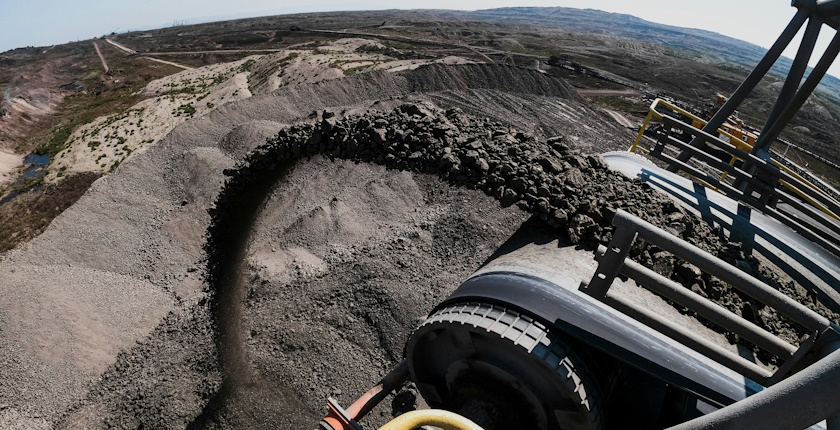
Photo: Albert Hyseni on Unsplash


In an emergency, if the prices of gas reach EUR 70 per MWh, Italy could be forced to reactivate its mainland coal power plants, which are on standby. The country pushed forward its legislative coal phaseout date by 15 years to 2038. In light of the energy crisis, Germany may also extend some deadlines, but the expenses are making the operation of such facilities untenable fast, except for heating purposes. One of the few coal plants in Bulgaria is shutting down next month.
As the US-Israeli war against Iran disrupted global flows of fossil fuels and other critically important goods, prices have spiked, as did the concerns about energy security in Europe. Italy’s Minister of the Environment and Energy Security Gilberto Pichetto Fratin suggested it would be necessary to reactivate coal power plants if the price of natural gas climbs to EUR 70 per MWh. TTF, the European benchmark, is relatively stable in the EUR 45 per MWh zone.
Italy has two coal plants on standby in the mainland and another two in Sardinia. Their closure depends on the ongoing works for another subsea cable link to the national grid. Coal power accounted for a mere 1.1% of domestic electricity output last year.
“We must be ready if necessary,” Pichetto Fratin, but clarified that the return to coal is “an emergency scenario, not business as usual.” Nevetheless, Italy pushed back the coal exit date by 15 years to 2038 in legislation that lawmakers adopted earlier this month.
Germany considering to postpone some coal plant shutdown dates
Chancellor Friedrich Merz said a month ago that Germany may need to hold a number of coal plants in operation past their gradual shutdown schedules, in case of a prolonged energy crisis and shortages.
The country has a law stipulating that coal use ends in 2038, which he said wouldn’t be affected. Given the greenhouse gas emission costs, the market was on track to push coal plants under the breakeven line already by 2032. The timeline also depends on the buildout of power plants running on natural gas and hydrogen, for replacement.
AES closing coal plant in Bulgaria
AES Corp. is closing its AES Maritsa iztok 1 (AES Maritsa East 1) coal plant in Bulgaria. Namely, its long-term supply contract with state-owned National Electricity Company (NEK) will expire on May 8, exposing it to the free market. The company is laying off 350 workers.
The firm owning the coal plant in Galabovo in Stara Zagora province is considering decarbonization options including a molten salt reactor at the site.
BlackRock’s Global Investment Partners (GIP) and EQT Infrastructure, along with co-underwriters California Public Employees’ Retirement System (CalPERS) and Qatar Investment Authority (QIA), agreed recently to take over AES in an all-cash deal worth USD 33.4 billion, including debt. The new owners are taking the utility private. They said it would invest in clean energy. AES is based in Arlington, Virginia.
Numerous remaining coal plants in the European Union and beyond are active just sporadically – in islands or to cover winter peaks or only until the district heating systems that they supply switch to cleaner sources.


Be the first one to comment on this article.