








Photo: Prostooleh on freepik.com


A new study shows the appropriate energy storage capacity in Greece for 2030 is 37.5 GWh.
The Aristotle University of Thessaloniki, together with Grant Thornton, conducted a study on behalf of the Independent Transmission Operator (IPTO or ADMIE). Professor Pantelis Biskas said this week during the Power & Gas Forum in Athens that one of the most important goals was to determine the optimal storage capacity, while keeping in mind system costs.
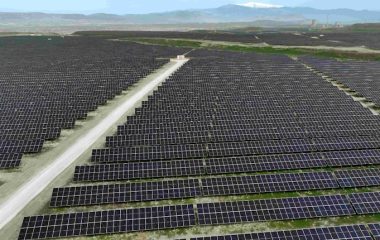
The first battery storage facilities are making their entrance into the Greek energy market. The country’s goal is to install upwards of 4.3 GW by the end of this decade, although the sector expects something closer to 4 GW. At the same time, 15 GW to 16 GW of photovoltaics is expected to operate.
Natural gas to become commercially unsustainable
Biskas revealed that the best scenario for storage is 37.5 GWh. This keeps the cost of developing storage to acceptable levels, while providing coverage for many hours each day. On the contrary, if Greece wanted to cover 97% of its needs exclusively through the combination of solar and storage, it would raise the levelized cost of energy (LCOE) to levels equal to natural gas units.
It was also mentioned that, as a result of the mass introduction of storage, natural gas plants would become commercially unsustainable. Therefore, the introduction of a capacity mechanism to support their availability is among possible solutions.
New tools to improve financing
As things stand right now, storage investments are vastly profitable, since the daily arbitrage between the lowest and highest wholesale power price stands at about EUR 200 per MWh. However, their gradual growth is expected to reduce margins and it is uncertain whether later projects will be sustainable.
Aurora Energy Research said that risk management will be essential from now on. Tools such as tolling agreements, day-ahead spread swaps and hybrid power purchase agreements (PPAs) can improve project financing.



Framing this as “over twice as much” is plainly incorrect, as one thing is in GWh and the other in GW. Its as if i said that a car that is 5 meters long and going 25m/s is 5 times faster than it is long.
The actual headline should be, “over two hours of peak production of storage capacity” or something like that