







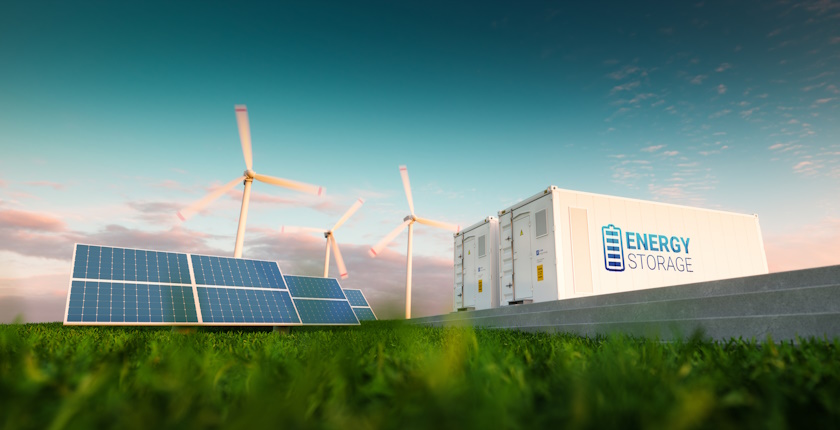
Photo: iStock


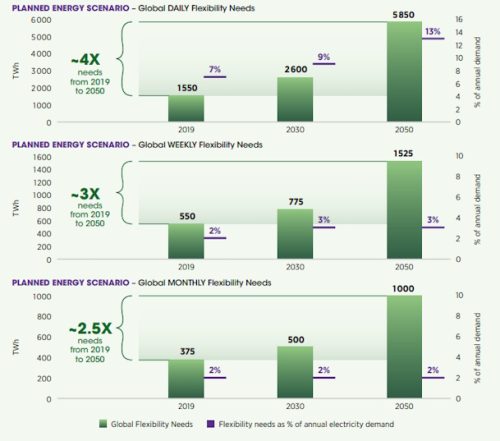
In IRENA’s Planned Energy Scenario at the global level, electricity system flexibility needs on a daily timescale are four times higher in 2050 than in 2019. In the weekly and monthly timescales, the energy required for the purpose grows by three and 2.5 times, respectively. As for the 1.5°C Scenario, implying a much higher share of renewables, the daily flexibility needs jump ten times by mid-century, versus six times for both remaining segments.
Electrification of end-use energy, large-scale deployment of distributed energy resources and the emergence of large new electricity loads from data centres are increasing demand and adding new layers of complexity. It means power systems will need stronger grids and more flexibility to ensure that electricity is available when and where needed and at the lowest possible cost, the International Renewable Energy Agency (IRENA) pointed out in a brief called Flexibility for a secure and affordable power sector transformation.
Aside from buildings and transportation, new demand is coming from the growing adoption of artificial intelligence (AI), driving the expansion of data center capacity. In 2024, data centers consumed 1.5% of electricity. The International Energy Agency expects the share to double by 2030.
The share of variable renewable energy is increasing – wind and solar power in particular. Demand patterns become more complex, so the potential for mismatches between supply and demand is likely to grow, becoming more frequent and significant. It highlights the increasing importance of system flexibility. It is the capacity to respond to expected and unexpected fluctuations in the demand for and supply of electricity in a cost-effective manner.
Some forms of flexibility act automatically to keep the system stable, while others can be scheduled and operate over hours, days or even seasons
Insufficient system flexibility can result in excessive curtailment or, in market-based systems, negative electricity prices. It can also result in shortages, jeopardising the reliable supply of electricity.
System flexibility is needed by the power system to adjust to the variability of generation and demand patterns across different timescales. Some forms of flexibility act automatically within seconds to keep the system stable, while others can be scheduled in anticipation and operate over hours, days or even seasons, through market adjustments and operational and resource planning.
Network flexibility, which isn’t covered in IRENA’s brief, is different. It is the capacity to adjust for grid availability by means of preventing or solving congestion or voltage issues.
Required flexibility depends on numerous factors
In the timescale of seconds to minutes, flexibility is needed to maintain the balance during sudden changes in demand or supply, such as the
disconnection of an interconnector or a major load or generator. The hours and days timescale has daily ups and downs of solar and wind generation alongside the peaks and troughs in demand throughout the day.
In the weeks and seasons segment, flexibility enables covering longer weather patterns caused by changes in the season or low-wind periods. In power systems mainly supplied by renewables, flexibility is also needed at inter-annual timescales. The main factors are climate-driven variations in resource availability. It especially concerns hydrology, but also wind and solar, as well as year-to-year differences in seasonal heating and cooling demand.
In power systems mainly supplied by renewables, flexibility is also needed at inter-annual timescales
Flexibility is not a single asset or function; instead it corresponds to a capability provided by a portfolio of different technologies, operational practices and market mechanisms. The required level of flexibility in a power system depends on, among other factors, the prevailing generation mix, geography, power sector structure and affected timescales.
Storage, demand-side management (DSM), interconnections and dispatchable resources each contribute differently.
Advances in forecasting and the introduction of shorter dispatch intervals, scheduled closer to real-time operation, allow more frequent and precise adjustments of generation and demand before electricity is delivered. One example are intraday markets complementing day-ahead markets.
Electricity must become main energy carrier by mid-century to keep global warming in check
In IRENA’s 1.5°C Scenario, the energy transition will be driven by the deployment of renewable energy, improvements in energy efficiency and the electrification of end-use sectors. The aim is to limit global warming to 1.5 degrees Celsius by 2100.
Electricity would need to become the main energy carrier by 2050. It would account for over half of total final energy consumption. The 2022 level was 23%.
Global electricity generation is projected to be 36% higher in 2030 and three times higher in 2050 than in 2023. Renewable resources would supply 68% of electricity in 2030 and 91% in 2050. Renewables would account for 77% of total installed power capacity in 2030 and 94% in 2050.
In the same setting, 70% of electricity generated in 2050 comes from wind and photovoltaics, taken together. In IRENA’s Planned Energy Scenario, not projecting full decarbonization, the level is 53%.
In IRENA’s 1.5°C Scenario, the share of electricity in total final energy consumption more than doubles by 2050, surpassing 50%
Flexibility needs are calculated as total cumulated annual energy deviation from the average net load (which excludes variable renewable energy generation).
In the 1.5°C Scenario, the power sector requires ten times more flexibility in 2050 than in 2019 to manage the daily variability of net load. In terms of share of annual electricity demand, the authors observed a surge to 30% from 7%. Flexibility needs for managing the variability in weekly and monthly timescales are both six times higher.
In IRENA’s Planned Energy Scenario, daily flexibility needs in 2050 are four times higher. In the weekly timescale, the level triples from 2019, and the monthly item is 2.5 times higher.
Batteries perform best in daily segment
Battery energy storage is the most effective in addressing daily flexibility needs, the report finds. It is only 24% as effective at meeting weekly needs and 12% as effective for monthly needs.
Interconnections and LDES are effective on the weekly and monthly scales
Interconnections are the most effective in addressing weekly flexibility needs, but also 98% as effective for monthly needs. As for the daily segment, the coverage is just 28%.
The numbers for long-duration energy storage (LDES) solutions are similar. Compared with addressing weekly flexibility needs, LDES is 90% as effective for monthly needs and 34% as effective in the daily item.


Be the first one to comment on this article.