






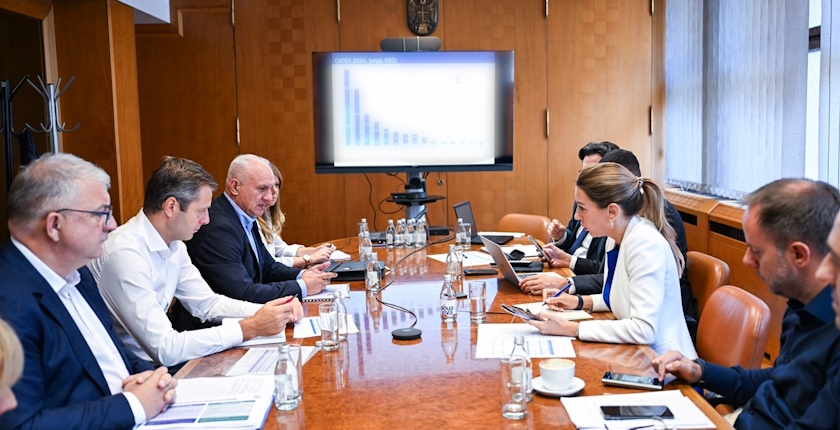
Foto: EPS/Danilo Mijatović


Serbia’s power utility Elektroprivreda Srbije adopted new rules for calculating electricity prices for consumers on the open market. Unlike for households, prices for businesses are not regulated by the state.
Elektroprivreda Srbije (EPS) said its shareholder assembly adopted a new electricity pricing system for the non-regulated sector.
The new methodologies aim to meet the needs of EPS’s commercial customers while ensuring financial integrity and business viability, according to the state-owned utility.
The new pricing system ensures that prices reflect current market conditions while providing stability and predictability for customers.
Živković: EPS wanted the pricing system to be more flexible because it’s what consumers demand
General Manager Dušan Živković told Balkan Green Energy News that the company wanted the pricing system to be more flexible in response to consumers’ requests.
“For example, a customer doesn’t want to buy all the energy that they need, but baseload energy from 8:00 to 16:00, and then get some on the market, too. Another one wants to make a contract for six months, to match their seasonal consumption, instead of for 12 months,” he stated.
With its new pricing system, EPS also aims to minimize the impact of price fluctuations, during which the price of electricity can rise from EUR 100 per MWh to EUR 500 per MWh.
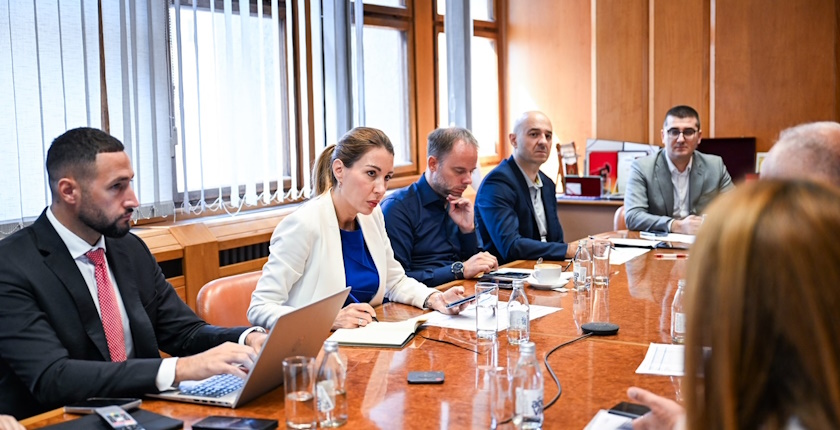
Minister of Mining and Energy Dubravka Đedović Handanović, the sole member of the company’s shareholder assembly, noted that Serbia has fulfilled the last so-called structural benchmark in the energy sphere under the agreement with the International Monetary Fund by adopting the new pricing system.
The new methodologies, in her words, now allow for monitoring market movements in either direction, both in the case of drops and price jumps. They would contribute to more efficient electricity supply contracts with customers on the open market, taking into account criteria such as the lowest price of electricity, payment deadline, and security of supply, Đedović Handanović said.
The following documents were adopted:
Methodologies for setting fixed prices and prices with leveling for the complete supply of electricity to end customers, based on market principles;
Methodology for forming prices for the supply to end customers under a contract with a predetermined quantity;
Methodology for setting end prices under dynamic tariffs for the complete supply of electricity to end customers;
Methodology for setting the selling price of electricity produced from renewable sources for the supply to end customers;
Methodology for setting the price of electricity that a buyer-producer (prosumer) delivers under a contract on a complete supply with net billing.
The minister said the flexibility brought by the methodologies would contribute to a more diverse energy offer, leading to improved energy efficiency and greater competitiveness of the Serbian economy by optimizing electricity costs of final products.

Be the first one to comment on this article.