





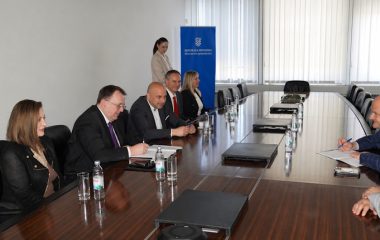
Photo: Boban Ristić


After a three years of implementation, on February 8 a pivotal project aiming to reshape the energy landscape in Serbia was finalized successfully. The IPA financed project “Further Development of Energy Planning Capacities” has served as an example of collaboration among all the energy sector stakeholders in the country for methodological strategic planning. Τhe project is outlining goals for Serbia’s energy sector in the coming decades, aiming to ensure secure supply, energy independence, and efficient and economical management of the decarbonization process.
Since its start in February 2021, the Ministry of Mining and Energy of the Republic of Serbia has joined forces with a consortium of Greek companies, LDK Consultants S.A and the Centre for Renewable Energy Sources and Saving (CRES) for the project implementation. In support, a number of international and Serbian sub-contractors (PURDUE University from USA, National Technical University of Athens from Greece, the Electricity Coordinating Center, d.o.o. and the Expert Engineering d.o.o.” from Serbia have collaborated.
The Ministry of Mining and Energy jointly with the project consortium initiated a mission to determine the direction of Serbia’s energy and climate future by developing the Integrated National Energy and Climate Plan (INECP) up to 2030, with a vision to 2050. The project scope also included the drafting of the Strategic Environmental Assessment Report of the INECP, and the development of four advanced energy modelling tools specifically designed for the strategic planning and optimization of the decision making process of the energy sector of Serbia.
An unprecedented level of collaboration across a broad spectrum of stakeholders has been fostered and demonstrated
Τhe project is outlining goals for Serbia’s energy sector in the coming decades, aiming to ensure secure supply, energy independence, and efficient and economical management of the decarbonization process.
In the context of this strategic initiative aimed at enhancing Serbia’s energy sector, two Working Groups were established with distinct focus, to ensure comprehensive monitoring and effective supervision of the process.
The first was leaning towards the analytical side of the spectrum, exploring the complexities of the energy modelling and macroeconomic tools, while the second was established with a policy-driven mindset, ensuring that the proposed policies reflected the analytical quantitative insights and aligned with Serbia’s aspirations for the future of the energy sector.
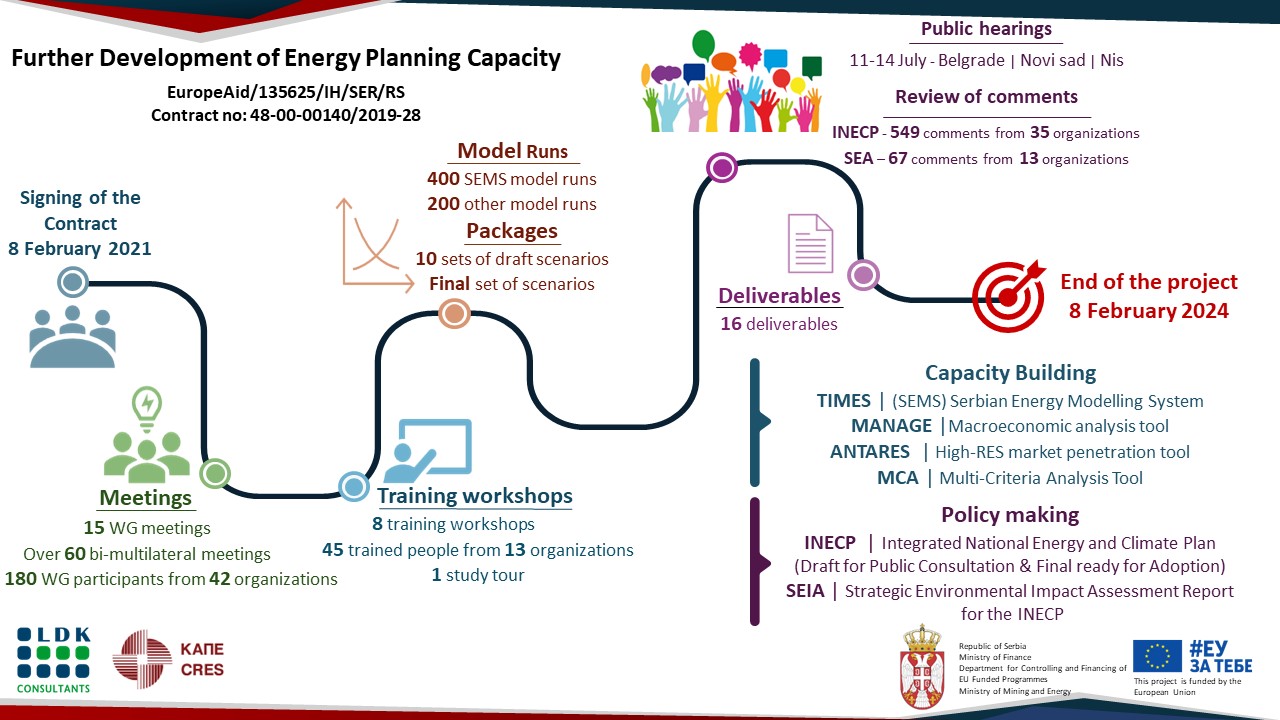
An unprecedented level of collaboration across a broad spectrum of stakeholders has been fostered and demonstrated through 15 working group meetings and more than 60 multilateral discussions, bringing together 180 participants representing more than 40 diverse organisations.
Oversight was provided by Ministries, public and private entities, and civil society organizations, as well as international representatives of the Energy Community Secretariat, the EU Delegation to RS, the EBRD etc.
A crucial aspect of the project’s legacy is the capacity building within the country
Building upon the cooperative basis established by the two Working Groups, the project has made substantial progress through the refinement and development of a suite of analytical tools. However, beyond the vast number of simulations conducted, more than 600 runs, and the introduction of sophisticated models, a crucial aspect of the project’s legacy is the capacity building within the country.
The project included a comprehensive training program, consisting of eight workshops that equipped 45 professionals from more than 10 different organizations with new skills and capabilities in the field of energy system modelling and macroeconomic analysis.
The technology, know-how, and models developed and deployed will remain within the ministry
This ensures that the country is well-equipped to periodically review and revise the INECP and other strategic documents, facilitating a strategic, smooth, and gradual transition towards a more sustainable path.
The long-term significance of these activities extends far beyond the immediate outcomes of determining the optimal scenario selection for the INECP. The technology, know-how, and models developed and deployed will remain within the ministry, serving as invaluable resources for Serbia for years to come.
Three joint Public Hearing sessions were held in Belgrade, Novi Sad, and in Niš with more than 160 participants from around 90 organizations
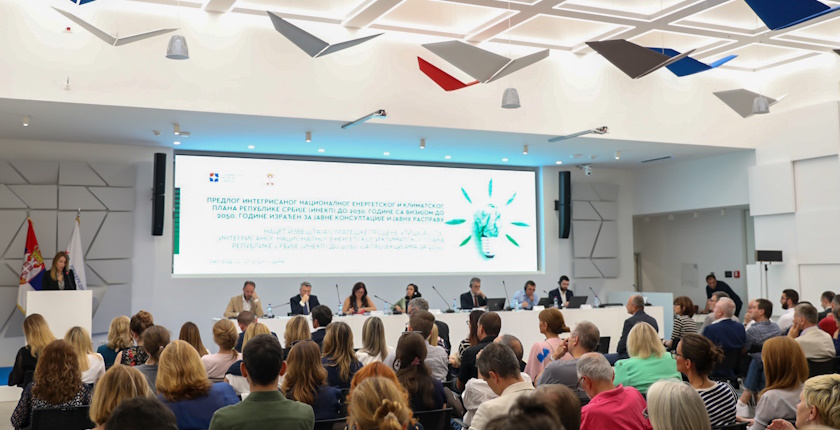
In July and August 2023, at the last phase of the project, the draft version of the INECP and SEA initiated an extensive round of public consultations, with significant participation. Three joint Public Hearing sessions were held in Belgrade, Novi Sad, and in Niš with more than 160 participants from around 90 organizations.
Feedback collected from the consultation period was comprehensive, totalling in more than 500 comments for INECP and 60 for SEA, from a large number of organizations and individuals. Furthermore, the Energy Community Secretariat sent more than 30 recommendations for the revision of the Draft INECP.
A solid foundation for Serbia’s sustainable energy future set
Since all comments, criticism, and suggestions have been thoroughly considered, this inclusive approach ensured that the final versions of the INECP and SEA documents were refined and adjusted to reflect the insights and recommendations from the public, stakeholders, and the Energy Community Secretariat.
This extensive consultation cycle highlights the project’s commitment to transparency, stakeholder participation, and incorporating a diverse range of inputs in achieving the objective of a sustainable and secure energy future for Serbia.
Finally, in late 2023, the project’s Working Group adopted the strategic documents, marking the conclusion of a challenging procedure. This pivotal moment not only symbolizes the culmination of years of dedicated effort but also sets a solid foundation for Serbia’s sustainable energy future.
Looking forward, this project has the potential to significantly influence Serbia’s approach to energy and climate policy, promoting a greener, more resilient, and energy-efficient country.
Be the first one to comment on this article.