







Photo: Pexels


Boilers powered by fossil fuels in buildings across the European Union (EU) could be phased out completely by 2040, as part of efforts to decarbonize heating systems and stop using fossil fuels in heating and cooling. The plan is part of a wider provisional agreement between the European Parliament and the Council of the EU.
The informal deal refers to a planned revision of the Energy Performance of Buildings Directive, which aims to substantially reduce greenhouse gas emissions and energy consumption in the EU buildings sector by 2030, and make it climate neutral by 2050.
By 2030 all new buildings should be zero-emission buildings, and by 2050 the existing building stock should be transformed into zero-emission buildings. The deadline for public buildings is 2028.
Under the agreement, EU member states will have to set out “specific measures on the phase-out of fossil fuels in heating and cooling with a view to a complete phase-out of boilers powered by fossil fuels by 2040,” reads the press release.
Heating systems combining a boiler with a heat pump will still be subsidized
They will also have to stop subsidizing stand-alone fossil fuel boilers as of 2025, while financial incentives will still be possible for hybrid heating systems, such as those combining a boiler with a solar thermal installation or a heat pump, according to a statement from the European Parliament.
The revised directive introduces a clear legal basis for EU member states to set requirements for heat generators based on greenhouse gas emissions, the type of fuel used, or the minimum share of renewable energy used for heating, according to a press release from the European Commission, which welcomed the deal.
Buildings are responsible for 36% of energy-related greenhouse gas emissions in the EU
Buildings account for 40% of energy consumed and 36% of energy-related direct and indirect greenhouse gas emissions in the EU, according to the European Commission’s data.
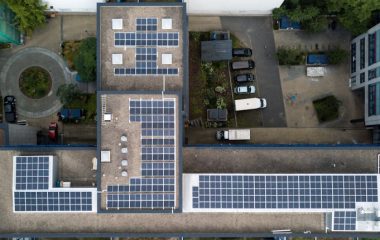
The revised directive also envisages measures to boost the deployment of solar installations in buildings, as well as the renovation of residential buildings in order to reduce the average energy consumption by 16% by 2030 and between 20% and 22% by 2035.

Be the first one to comment on this article.