







Photo: Pixabay/12019


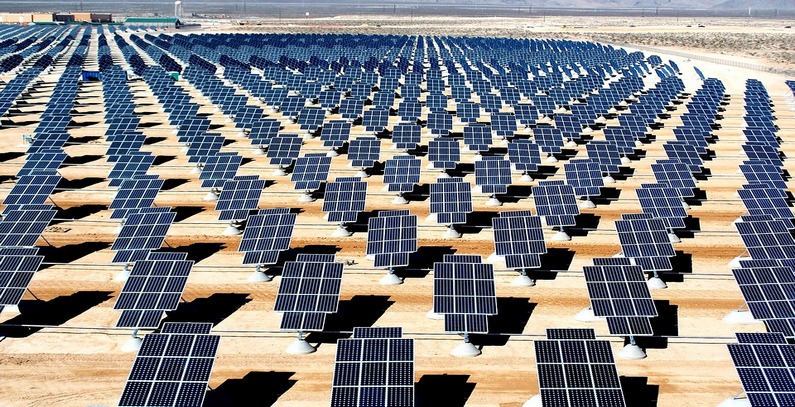
India’s state renewable energy agency SECI has awarded a USD 6 billion contract to domestic renewables company Adani Green Energy Limited to develop a total of 8 GW of solar power projects over five years and set up solar cell and module manufacturing capacities totaling 2 GW.
The first 2 GW of generation capacity will come online by 2022, while the remaining 6 GW will be added through 2025 at a pace of 2 GW a year, the company said. The projects will include a variety of locations, according to Adani Green Energy, which is part of the Adani Group, a diversified company with a market capitalization of USD 22 billion.
The plan includes a single-site system of 2 GW, which would make it one of the largest in the world.
Azure Power also won huge contracts – for 4 GW in photovoltaic plants and the production of solar kits of 1 GW.
Adani’s solar cell and module manufacturing units will be established by 2022 and, along with the existing 1.3 GW of capacity, will further consolidate the Adani Group’s position as India’s largest solar manufacturer, the company said in a press release.
The project will eliminate 900 million tons of CO2 over its lifespan
The contract is the largest of its type in the world to date, according to Adani Green Energy. The entire project is expected to eliminate 900 million metric tons of CO2 over its lifespan, while creating 400,000 direct and indirect jobs.
Thanks to this contract, Adani Green Energy will now have 15 GW of capacity under operation, construction or under contract in what will speed up “its journey towards becoming the world’s largest renewables company by 2025.” This award will also take Adani Green Energy closer to its target of achieving an installed generation capacity of 25 GW of renewable power by 2025, the company said.
India’s target for 2030 is 450 GW in renewables generation capacity
At the UN Climate Action Summit in 2019, Indian Prime Minister Narendra Modi announced India’s target of 175 GW renewable energy by 2022, while the country’s longer-term target is 450 GW renewable energy capacity by 2030, according to State of Green. In comparison, the European Union currently has renewable energy capacities totaling 496 GW.
India’s goal is 40% of clean energy by 2030, the news service reported after the country signed a memorandum of understanding with Denmark to cooperate on the green energy transition in India over five years.



Be the first one to comment on this article.