







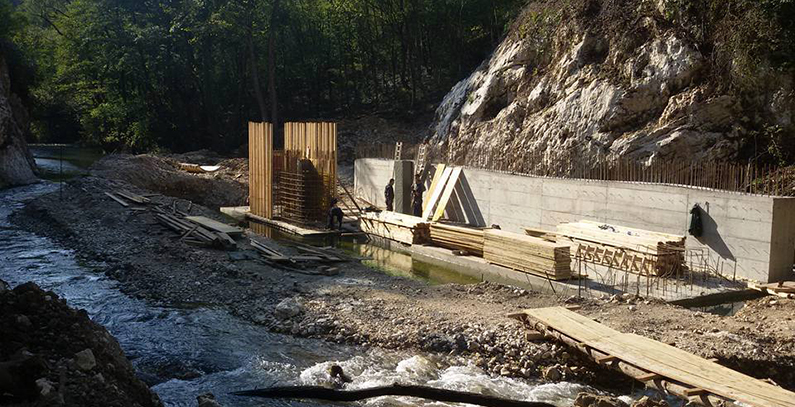
Photo: Facebook/gorantokic


After local residents jumped up clamoring against the construction of small hydropower plants (SHPPs) across Serbia, experts have joined the protest too… Ratko Ristić, dean of the Belgrade university’s Faculty of Forestry, Željko Tomanović, dean of the Faculty of Biology, Dejan Filipović, dean of the Faculty of Geography, Dušan Polomčić, dean of the Faculty of Mining and Geology, and Pavle Pavlović, director of the Siniša Stanković Institute of Biological Research have sent an open letter to Environmental Protection Minister Goran Trivan and Pirot Mayor Vladan Vasić in which they express concern regarding the conservation of natural resources and demand a review of the country’s energy policy.
For two years now, the citizens’ Initiative to Defend Mt. Stara Planina Rivers has been trying to protect this mountain and its inhabitants from SHPP construction, which has been booming since 2009, when the state decided to subsidize the production of electricity at such facilities. On September 2 this year, the Initiative staged a mass protest in Pirot, announcing plans to declare an “ecological autonomy” of Mt. Stara Planina.
“We express grave concern regarding the conservation of natural resources in the context of the planned and partially executed construction of small hydropower plants (SHPPs), especially in various protected natural areas, which, as you may well know, is in violation of numerous laws and regulations and which is often carried out even after negative opinions and requirements issued by the Institute for Nature Conservation of Serbia,” reads the letter from the professors.
According to them, the planned construction of 58 SHPPs on Mt. Stara Planina endangers the traditional way of life and livelihoods of local residents and threatens to drive them away from Mt. Stara Planina villages, some of which are protected cultural and historical heritage sites.
“Serbia is the poorest country in the Balkans when it comes to domestic surface waters. The water resources are suffering under an additional negative impact from numerous polluters, poor management, and, above all, the mass construction of SHPPs, which threatens to completely destroy what little we have left of these precious resources. We fully understand the obligation to partly replace the production of electricity from fossil fuels with the so-called “green” energy from renewable sources. However, SHPPs are very modest electricity producers: if all 856 facilities were to be built, according to the existing Cadastre, only up to 3.5% of the necessary annual electricity needs would be covered, while at the same time the most valuable mountain watercourses would be destroyed (e.g. the Jošanička Reka river on the slopes of Mt. Kopaonik), with damage also caused to landscape, biodiversity, and geodiversity,” the professors warn in the letter.
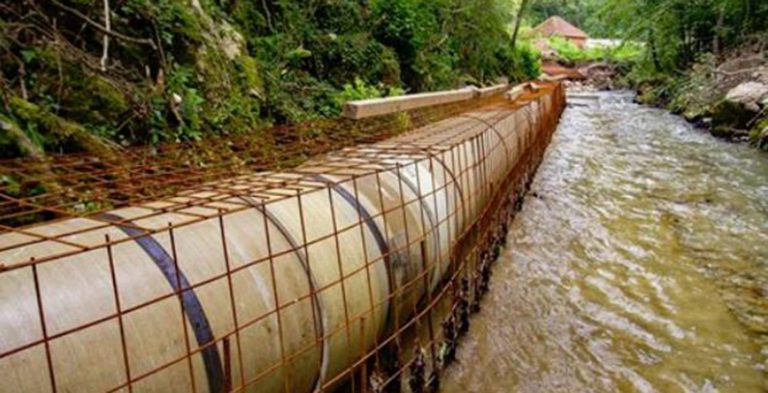 There are alternatives to SHPPs, but not to clean water
They also recall that Serbia and the Balkans are among the most important biodiversity areas when it comes to the brook trout in Europe, while SHPPs are being built on such rivers due to the apparently sufficient quantities of water and slope gradients, which allows for a profitable operation of these facilities with minimum investment. All this, they point out, comes with the absence of care for the ecosystem.
According to the experts, the sole purpose of fish passages built at such facilities is to meet formal criteria, while they are also pointless as the brook trout is not a migratory species and does not use fish passages.
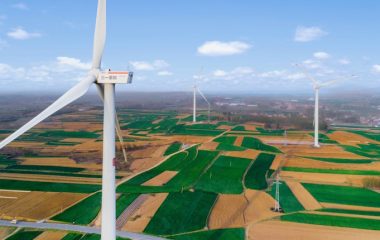
“There are much more efficient and viable options today for the production of renewable energy, and more sustainable in terms of landscape and environment protection (wind, solar, biomass, geothermal energy…). As opposed to this, there is no alternative to clean water, while life without it is not possible. We believe that it is necessary to stop the ongoing destruction of clean mountain rivers and review the overall energy policy, laws, planning documents, as well as regulations in the cases where they are detrimental to the population, water resources, and ecosystems,” according to the letter.

Be the first one to comment on this article.