



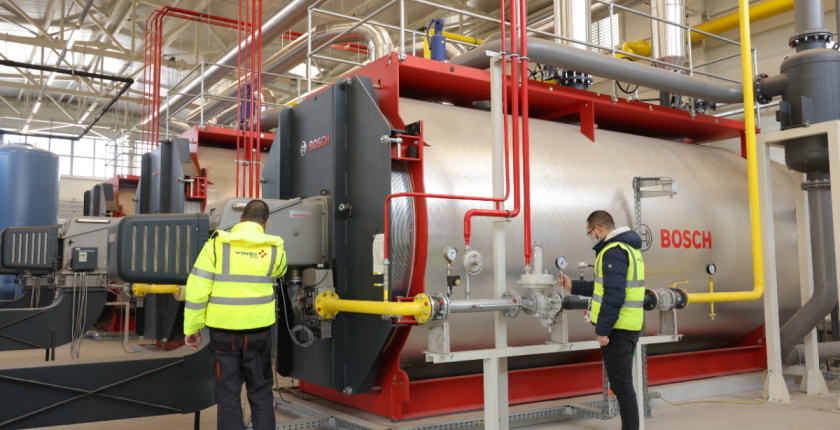
The Nikola Tesla Airport has put into operation a 44 megawatt (MW) natural gas-fueled trigeneration facility for the production of heat, electricity and cooling. The heating system, which used oil, was converted to gas, which reduces pollution.
French company Vinci Airports, which operates the Nikola Tesla Airport in Serbia’s capital Belgrade, said the energy plant with its trigeneration system is another important step in implementing an environmental action plan and achieving net zero greenhouse gas emissions by 2050.
The company added it plans to continue with the projects for sustainable development, pointing out that a 1 MW solar power plant, two new solid waste treatment plants and a wastewater treatment plant are in the final phase of construction.
The new trigeneration facility has increased the airport’s heating capacity by 25 percent, creating conditions for hosting more passengers in the future
The total heating capacity of the airport has been increased by 25%, thus covering all the needs for thermal energy not only of the current customers, but also of the future ones, as envisaged by the planned development of the airport, Vinci Airport said and added the carbon footprint has been reduced by 25% or 3,000 tons of greenhouse gases.
Of note, in December 2020, Belgrade Airport, operator of the Nikola Tesla Airport, joined the Airport Carbon Accreditation program – ACA for the management of carbon dioxide emissions, and got a level 1 certificate for the facility.
The modernization and reconstruction of the airport envisages investments in environmentally sustainable business
François Berisot, CEO of Belgrade Airport, said that the new energy plant, provides great savings both for the airport and in terms of utilization of available natural resources, in addition to the decrease in environmental impact, global warming and the improvement of local air quality.
Extensive works on the airport’s modernization and reconstruction include significant investment into environmentally sustainable business, in order to further reduce the environmental impact in terms of greenhouse gases, water and waste, said Berisot.