







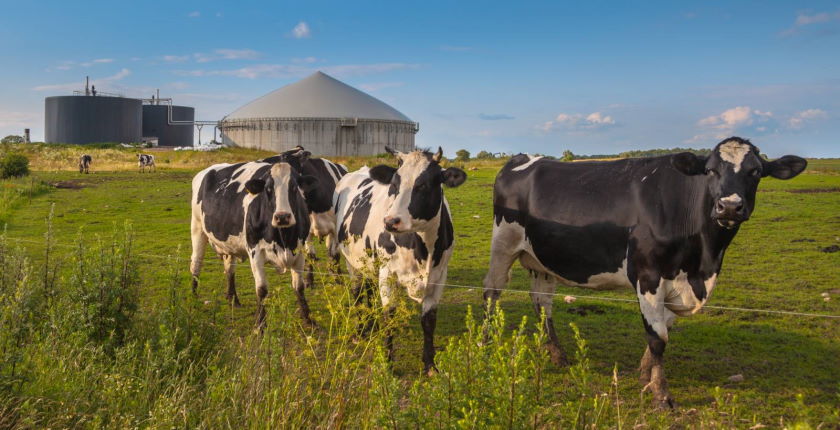
Photo: iStock


Turkey has built a prototype of a device to convert animal waste biogas into biomethane, a renewable alternative to natural gas. The biogas upgrading process, which accounts for some 90% of all biomethane produced worldwide, could enable the country to substitute 10% of its annual natural gas consumption, according to estimates. Turkey’s technology is being developed by TEMSAN, an electromechanical company affiliated with the Ministry of Energy and Natural Resources.
If all animal waste in Turkey were to be used for the production of biomethane, the output would be equivalent to 6 billion cubic meters of natural gas, said Ali Rıza Öner, head of business development at ITC, a company that handles waste disposal in 13 cities in Turkey, Yeni Şafak reported. In 2021, Turkey spent about USD 15 billion on some 60 billion cubic meters of natural gas.
Turkey has the potential to produce an equivalent of 6 billion cubic meters of natural gas annually from animal waste
Öner explained that animal waste biogas produced in existing waste incineration plants needs to be converted into biomethane, by increasing its methane content, in order to be injected into the natural gas network. The methane content in biogas is 55%, compared with 95% in natural gas, he noted.
To be used in the natural gas system, biogas needs to be upgraded into biomethane
Biomethane, he said, is a trend in Europe and the US. Electricity generation from biomethane can be an alternative for biogas power plants that are expired or about to expire, Öner added.
Turkey’s biogas capacity grew from 762 MW to 1 GW in 2021
Last year, Turkey continued with an impressive expansion in the electricity generation capacity using renewable sources. In the biogas segment, the capacity was increased from 762 MW to 1 GW.
The Istanbul Metropolitan Municipality produced 844 GWh of power in waste incinerators and from landfill gas in 2021, enough to cover electricity needs of 1.2 million people, with the figure set to grow to 2 million people in 2022 as the capacity has been expanded.
Hydrogen could also help Turkey to reduce energy imports
Turkey has also been increasing the use of hydrogen in various sectors, in an effort to move towards cleaner resources and become less dependent on imported energy. Last year, the SHURA Energy Transition Center said Turkey could produce as much as 1.6 million tons of green hydrogen a year, substituting 5% of total final energy consumption.




Be the first one to comment on this article.