


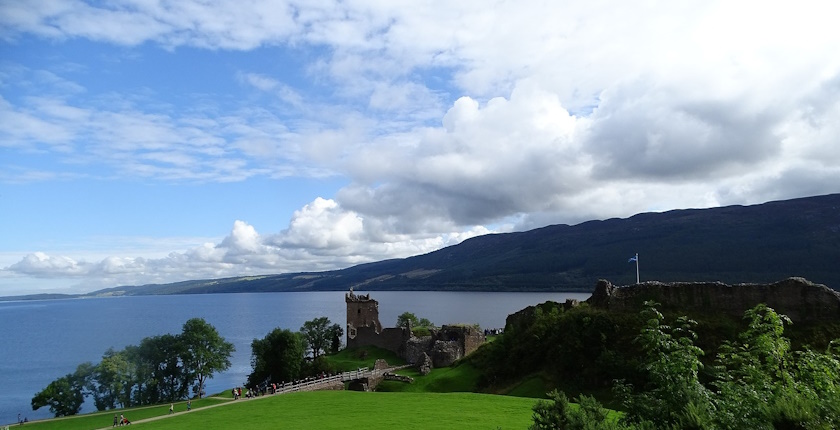
Norwegian company Statkraft has acquired the Red John pumped storage hydro scheme in Scotland from Intelligent Land Investments Group (ILI), with an expected capacity of 450 MW. The project is located near Loch Ness, home to the legendary Loch Ness Monster, affectionately called Nessie.
The project was conceived in 2015 and received official approval from the Scottish Government in June 2021. The proposed pumped storage complex, 14 kilometers southwest of the city of Inverness, will store excess electricity from renewable sources. According to the company, it will help strengthen the security of energy supply and reduce fossil fuel use in Great Britain’s power grid.
Pumped storage hydropower plants are enormous water batteries
Pumped storage hydroelectric plants have two or more reservoirs at different elevations. When there is excess electricity in the grid, for instance when demand drops, it is used to pump water from the lower to the upper reservoir. When there is a shortage of electrical energy, water is released downhill into the lower reservoir, driving hydroelectric turbines.
Hydropower stations with pumps function like massive water batteries, offering a flexible means of storing excess energy generated from renewable sources.
“This significant UK renewable energy infrastructure project will support hundreds of jobs during construction and provide locally based permanent jobs once operational,” according to the press release.
The UK needs to provide financial support
“Statkraft is fully committed to supporting the UK in strengthening its energy security and helping to secure the economic benefits of the net zero transition,” said Kevin O’Donovan, the company’s country manager. However, an appropriate support mechanism is needed, he noted. O’Donovan argued that it is the responsibility of the British government to ensure that the Norwegian company moves into the next phase without uncertainty.
ILI’s CEO Mark Wilson stressed that the United Kingdom should implement incentives for long-term energy storage projects and strive to become a global leader in eliminating greenhouse gas emissions. He added there are pumped storage hydropower projects in the country with a total planned capacity of 5 GW.
In July, the Scottish government approved Drax Group’s 600 MW pumped storage hydropower project. The Cruachan pumped hydro plant with a capacity of 450 MW, operational since 1965, is carved into the mountain of Ben Cruachan. The new facility would be built next to it.
Drax has also urged the authorities to improve “the financial stabilization mechanism” and pointed out that no pumped storage hydropower plant has been built since 1984.