

Energy Crisis

Slovenia expects electricity price hike in Q3 2022

Slovenia faces electricity price hikes this year

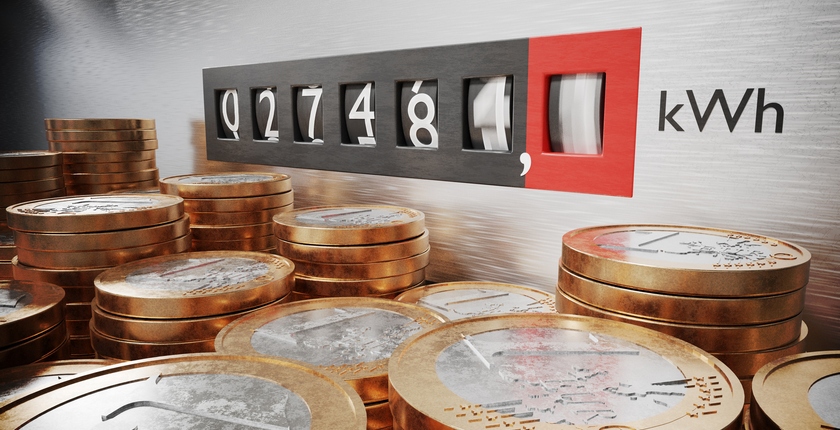
Photo: iStock

Published

May 18, 2022

Country

Comments

comments icon

0

Share

Published:

May 18, 2022

Country:

Comments:

comments icon

0

Share

Electricity price hikes could be expected in Slovenia by the end of the third quarter, when power retailers’ long-term contracts are due to expire and new ones will need to be signed.

Slovenia hasn’t been affected by high electricity prices despite the energy crisis and the war in Ukraine, CEO of transmission system operator ELES Aleksander Mervar has told Slovenia’s Radio Slovenija.

Mervar said that domestic retailers bought electricity in time, in advance, and their average price is EUR 55 per MWh. Prices on power exchanges today are averaging between EUR 120 and EUR 200 per MWh.

Retailers bought electricity in advance, and their average price is EUR 55 per MWh

These contracts, however, expire in the third quarter of the year, according to him.

According to Mervar, a household with a monthly bill of EUR 100 at the moment would have to pay EUR 350-400 in 2023. However, if production prices in domestic power plants are taken into account, then the price for households, not businesses, could be lower.

Speaking on projections, the end of the war in Ukraine, in his words, would lead to lower prices, and that could happen in 2024. Mervar sees long-term sustainable prices at EUR 100 to EUR 110 per MWh.

New nuclear power plants would dictate prices in the future

New renewable power plants are expected to be connected to the grid in large numbers, while new nuclear facilities would be marginal power plants, but would dictate prices, said Mervar.

He also said the public is mistaken that energy companies in Slovenia, such as HSE and GEN, are making enormous profits due to the high prices on the market. These companies have sold electricity at very low prices, Mervar added.

He believes that funds for subsidies to help households and industry cannot be obtained in the energy sector.
Comments (0)

Be the first one to comment on this article.

Enter Your Comment
Please wait... Please fill in the required fields. There seems to be an error, please refresh the page and try again. Your comment has been sent.

Related Articles

serbia eu region bef 2026 cbam border eu western balkans

CBAM may hinder decarbonization and renewables, contrary to its intended aim

18 May 2026 - The European Union’s Carbon Border Adjustment Mechanism (CBAM) has caused serious disruptions to electricity markets...

NGEN Smart batteries AI are energy transition bedrock

NGEN: Smart batteries, AI are energy transition bedrock

18 May 2026 - The energy system of the future is decentralized, dynamic, and software-controlled, NGEN Group's representatives pointed out at BEF 2026

Governing the Unseen: Interdependencies in Europe’s Digital–Energy Transition and Sovereignty

Governing the Unseen: Interdependencies in Europe’s Digital–Energy Transition and Sovereignty

18 May 2026 - The growing digital-energy nexus is reshaping Europe’s energy transition, creating new opportunities and challenges for resilience, competitiveness and strategic autonomy.

Establishing a Robust Transmission Grid: The Essential Role of Balkan TSOs in the Green Transition

Balkan TSOs face green transition challenge: grids must keep pace with energy shift

18 May 2026 - Investments in grids, digitalization, and energy storage are key to ensuring security of electricity supply amid rapid decarbonization, representatives of regional TSOs said at Belgrade Energy Forum (BEF 2026)