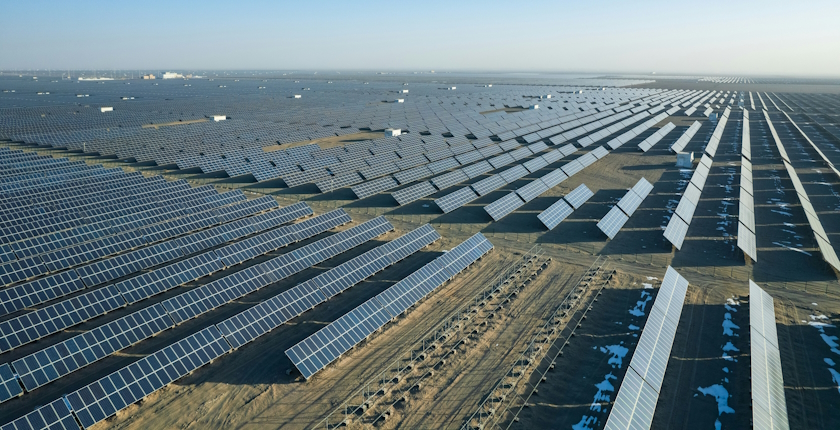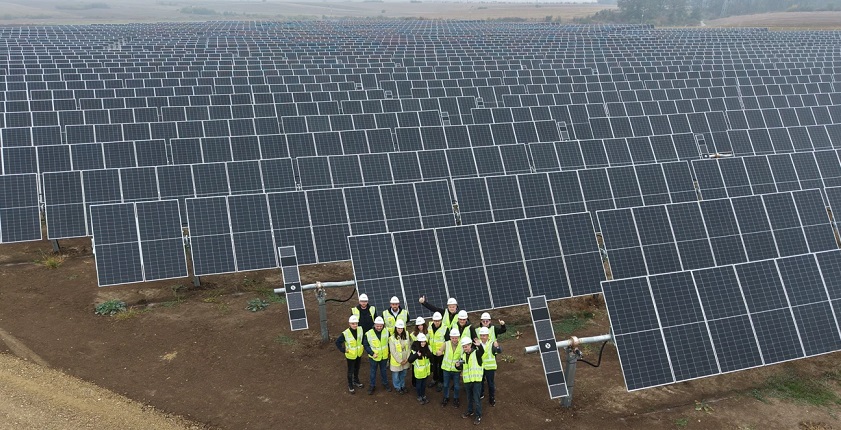


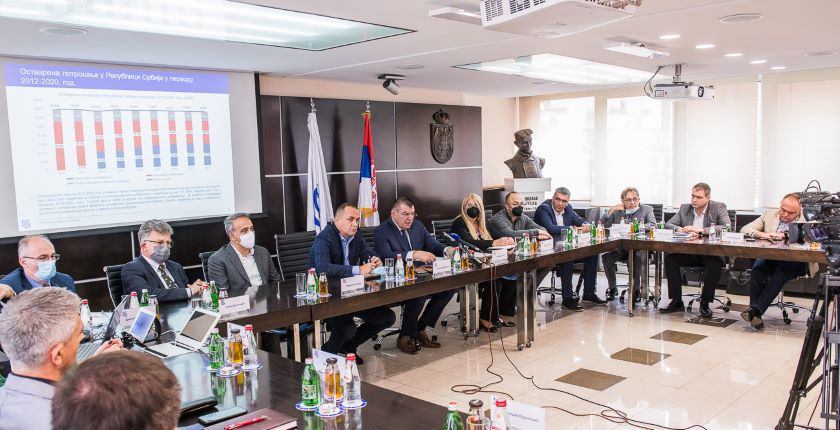
Acting Director Milorad Grčić said Serbian state-owned power producer EPS aims to install 240 MW in solar power plants and 100 MW in wind farms by the end of the decade but that it would like to continue with the halted project for coal plant Kolubara B.
Renewable energy has a 30% share in electricity production in Elektroprivreda Srbije (EPS), Serbia’s government-controlled utility, while the goal is to boost it to 40% in five years and the remaining 60% would be in coal-fired thermal power plants, Acting Director Milorad Grčić said. Those who wanted to shut down lignite mines and thermal power capacities wanted the country to become less and less independent in terms of energy, in his view.
EPS aims to increase the share of renewables in electricity output to 40% from 30% in five years
EPS is modernizing and strengthening all its production facilities including the mines but the plan is also to have 240 MW in solar power plants and 100 MW in wind farms by 2030, Grčić revealed. He also said the company wants to continue the 350 MW Kolubara B coal plant project, which was stopped in May, arguing the foundations have been built and it already has some of the equipment. EPS will “continue to fight” for it, the acting director underscored.
The government hasn’t been completely clear on whether the project with PowerChina is done for good.
No immediate price increase for households
The citizens of Serbia enjoy the cheapest electricity in the region, Grčić claimed and added enough power is being generated and that EPS isn’t planning “at the moment” to increase its prices He noted the company is working on the 181 MW Gornja Drina hydropower project in neighboring Bosnia and Herzegovina.
Grčić: The company will continue to fight for the Kolubara B coal plant project
EPS added 142 MW in capacity to its existing hydropower plants by refurbishing them and such projects will increase the total to 190 MW, according to Grčić. The works on Đerdap 1 are almost complete and Đerdap 2 will be completely rehabilitated as well, he said.
The Ministry of Mining and Energy has said Serbia would also build pumped storage hydropower plants Đerdap 3 and Bistrica.
Windfall from power exports
EPS earned EUR 98 million in the first half of the year, Grčić asserted. The company has a “very good” export-import balance, he said and added that it achieved EUR 110 million in profit since 2016 from 4 TWh in net power sales in the open market, he said. The acting director expressed confidence EPS would be fully harmonized with the European Union’s environmental directives by 2027.
A spike in energy prices has caused a crisis worldwide. EPS and other power plant operators in the Western Balkans don’t pay for greenhouse gas emissions like their counterparts in the European Union.
The utility is preparing to build photovoltaic facilities at coal power plant ash and slag dumps – one with the capacity of 97.2 MW and three of almost 10 MW each. It has been working on a 66 MW wind power project at such a site and on one of the planned solar power units since at least 2014.