


Montenegro is still negotiating a postponement of the implementation of the European Union’s carbon border tax or an exemption from the levy, according to Minister of Energy and Mining Admir Šahmanović.
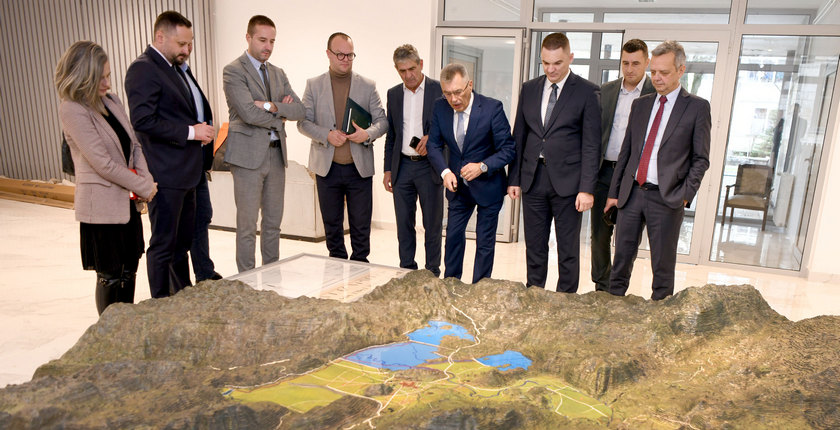
“We are not giving up on the request for an exemption or a postponement of the application of CBAM. The potential effects would be significant for [Montenegro’s] energy system, which is why we are negotiating at the European and regional level, while at the same time accelerating domestic energy projects,” Šahmanović said at a meeting with the management of state power utility Elektroprivreda Crne Gore (EPCG).
The EU’s Carbon Border Adjustment Mechanism (CBAM) represents a key issue for the Montenegrin energy sector, and it requires coordinated action by the government and energy companies, it was stressed at the meeting, which was also attended by Damjan Ćulafić, the minister of ecology and sustainable development.
The CBAM negotiations require joint efforts by the government and energy companies
At a meeting of the Energy Community Ministerial Council in December last year, Montenegro and Bosnia and Herzegovina asked for the application of CBAM to be postponed.
CBAM, whose implementation is scheduled for January 1, 2026, imposes a tax on CO2 emissions for goods imported into the EU from countries that do not have carbon pricing. The tax will cover cement, iron and steel, aluminum, fertilizers, electricity, and hydrogen. CBAM is expected to have a serious impact on the EU’s neighbors, including the Western Balkan countries.
At the meeting at the EPCG headquarters in Nikšić, it was agreed to continue communication with EU institutions to ensure additional flexibility for Montenegro in the process of CBAM implementation, according to a statement from EPCG.
Montenegro will highlight its investments in environmental projects and the energy transition
A particular emphasis in the talks will be placed on arguments related to investments in environmental projects and the energy transition in Montenegro, the statement added.
The EPCG management updated the ministry on the progress of its solar and wind energy projects, which play a key role in ensuring grid stability and energy security, while Šahmanović emphasized that the state strongly supports these investments and is speeding up procedures to help build new capacities as quickly as possible, according to the statement.