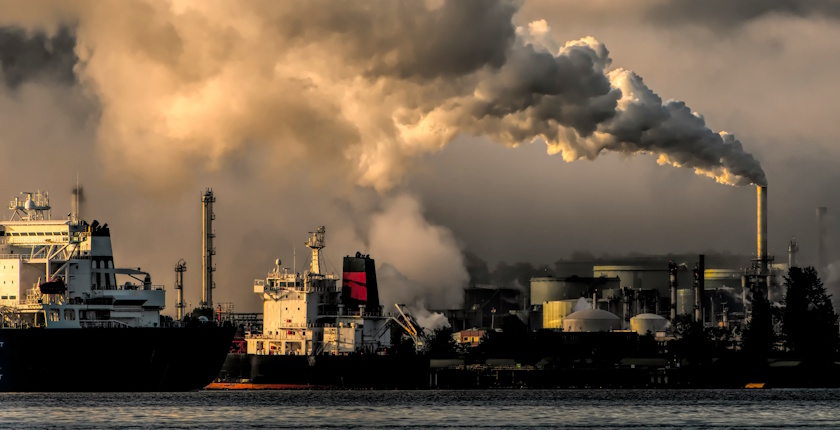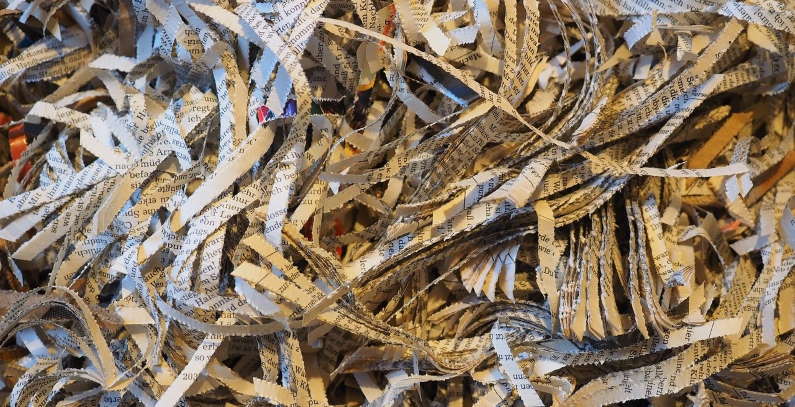
Emissions in the wastepaper industry can be almost wiped out by mid-century with renewables providing the energy for the process, but the continuation of current practices can make matters worse, scientists found. The recycling branch is still dependent on polluting fuels, lagging substantially behind the progress that manufacturers of new paper achieved.
If all wastepaper was recycled with the existing technology, greenhouse gas emissions could increase by almost 10% by 2050, as recycling the material normally relies more on fossil fuels than the production of new paper does, a study showed. It involved scientists from the Institute for Sustainable Resources of the University College London (UCL), Yale Center for Industrial Ecology and UCL Civil, Environmental and Geomatic Engineering.
They said the emissions, which exacerbate global warming, would drastically go down if paper production and recycling were powered by renewable energy. The researchers modelled wastepaper recycling scenarios.
Use of pulp byproduct for energy makes production of new paper cleaner than recycling
Making new paper from trees requires more energy than paper recycling, but energy for the process is generated from black liquor – the low-carbon byproduct of the wood pulping process. Modernising landfill practices, for instance by capturing methane emissions and using them for energy, also had a positive effect, although not as profound as moving to renewables.
Upgrading landfill practices, including capturing methane emissions and using them for energy, had a limited positive effect
“Our study shows that recycling is not a guaranteed way to address climate change… We looked at global averages, but trends may vary considerably in different parts of the world. Our message isn’t to stop recycling, but to point out the risk of investing in recycling at the expense of decarbonizing the energy supply and seeing very little change to emissions as a result,” lead author Stijn van Ewijk said.
Conserving resources is still critical for sustainability
The researchers emphasised recycling has benefits beyond combatting global warming. “Our exponentially increasing consumption of global resources has many seriously damaging environmental impacts beyond climate change, and conserving resources, including by paper recycling, remains critical for sustainability,” co-author Julia Stegemann stated.
Paper accounted for 1.3% of global greenhouse gas emissions in 2012, according to the document. A third came from the disposal of paper in landfills. The researchers said the use of paper would likely rise, with the move away from plastics leading to increased demand for paper packaging.
The move away from plastics leads to increased demand for paper packaging
The current trend leads to emissions to 736 metric tons of carbon dioxide equivalent in 2050 or 2% more than what was measured for 2012. It implies that the increase in demand for paper trumps efforts to mitigate climate change in the sector.
A radical program of recycling, with landfill and energy uses remaining on the same path, would increase the volume of harmful gases by just under 10% to 808 metric tons.
Technology upgrade, renewables can slash emissions by 96%
On the other hand, radically modernizing landfill practices would reduce emissions to 591 metric tons, while moving to renewables, with recycling and landfill practices remaining on the standard path, would reduce emissions by 96% to 28 tons.
“The recycling of some materials, for instance metals, can lead to a very large reduction in emissions. But we need to be careful about assumptions that recycling, or a circular economy in general, will always have a positive effect on climate change,” senior author Paul Ekins said.
Researchers explained that, while paper recycling can save trees and protect forest carbon stocks, the extent is unknown because of a lack of understanding of the global forest carbon stock and the interrelated causes of deforestation. The analysis, therefore, assumes that recycling neither harms nor benefits forests.