








Photo: Pexels


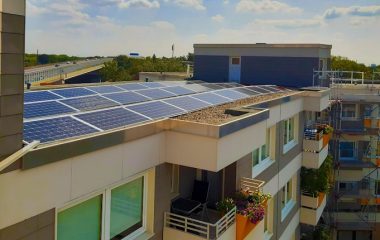
North Macedonia has prepared legislative changes to increase the capacity threshold for prosumers and speed up rooftop solar permitting and grid connection.
Under the proposed amendments to the Law on Energy Efficiency, the capacity threshold for rooftop solar installations would be increased to 10 kilowatts (kW) for households and 70 kW for firms, according to a statement from the Ministry of Energy, Mining and Mineral Resources. The current threshold is 6 kW for households and 40 kW for firms.
The threshold should go up to 10 kW for homes and 70 kW for businesses
The amendments should also introduce a one-month deadline for the permitting procedure for installing solar equipment with a capacity of up to 100 kW. This includes prosumers and energy communities, according to a draft law on renewable energy use.
According to the North Macedonian office of law firm CMS, the country’s parliament has already introduced amendments to the rulebook on renewable energy sources, increasing the capacity thresholds for both household and business prosumers, among other things.
One-month deadlines are proposed for rooftop solar permitting and grid connection
The ministry noted that a legal deadline for issuing permits for rooftop photovoltaics for prosumers is being introduced for the first time.
The same deadline is being proposed for grid connection: the distribution system operator would be required to connect the installation to the grid within one month of officially confirming that the submitted documentation is complete.
According to the proposed amendments, if connection to the requested location is not possible, the operator is obliged, within 15 days from the date of submission of the connection request, to notify the applicant in writing and propose an alternative connection point.
Installing solar collectors for hot water in new public buildings will become mandatory
The proposed legislative changes will also make the installation of solar collectors for hot water mandatory in new public buildings, or in cases of significant reconstruction of existing ones, if technically and economically feasible.
Renewable energy sources account for more than half of North Macedonia’s total generation capacity, with over 616 MW of new renewables capacity installed in the past two years, DW reported, citing data from the country’s Energy, Water Services and Municipal Waste Management Services Regulatory Commission (ERC or RKE).
Be the first one to comment on this article.