

Special purpose vehicle VE Rakova Bara, set up by Ivicom Holding, has a task to install a wind power plant with a capacity of 150 MW near Kučevo in eastern Serbia, next to the Austrian company’s wind park Krivača.
Ivicom Energy began the construction of wind park Krivača in the Golubac municipality in May. It will be the first such facility south of the rivers of Sava and Danube in Serbia. That’s when its majority owner, Austrian-based Ivicom Holding, established another firm, VE Rakova Bara, for a wind power project next to Krivača. Both locations are in the vicinity of the Đerdap national park and geopark in Serbia’s east.
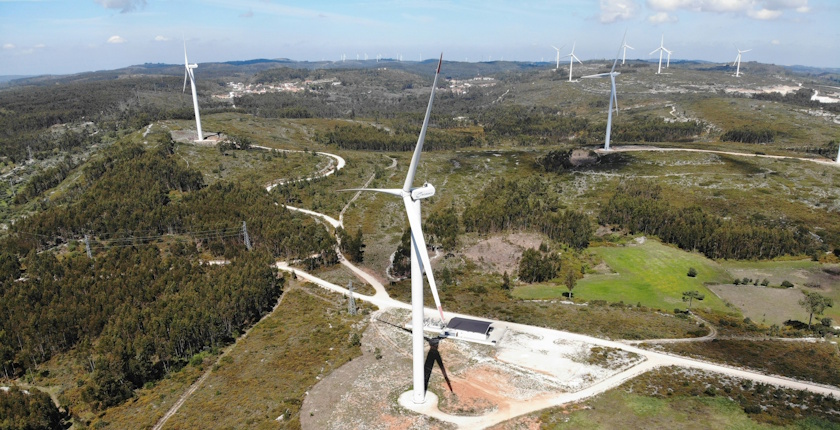
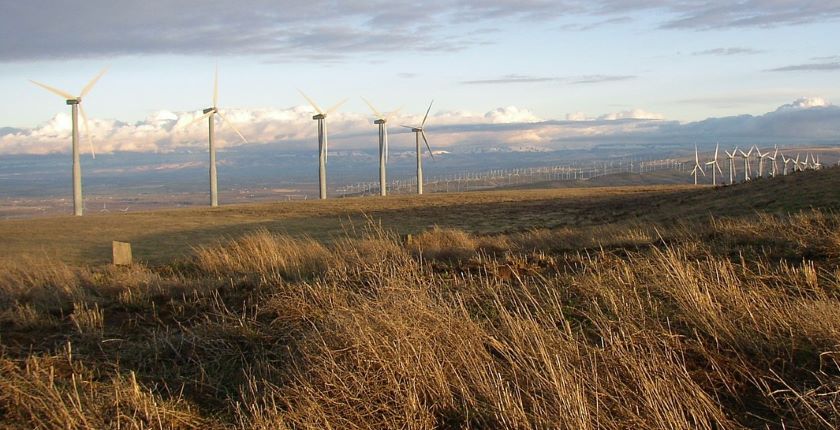
VE Rakova Bara commissioned a study for a detailed regulation plan and the Municipality of Kučevo published it for public review by October 27. The planned capacity of the wind power plant is 150 MW. Rakova Bara is envisaged to consist of 30 or so turbines. The rotor diameter is limited to 160 meters, while the hub height can be up to 120 meters, compared to a maximum of 210 meters to the tip of the blade.
The Rakova Bara facility is envisaged to consist of thirty or so turbines
Wind power plant Rakova Bara would be built between the villages of Rakova Bara, Ševica, Duboka and Radenka, spanning 1,751 hectares. The document’s authors proposed the construction of a 110 kV power line toward the existing 400 kV overhead power line south of the location. Arhiplan from Aranđelovac produced the study.
Ivicom Holding controls 70% of VE Rakova Bara, while the rest is owned by Slovenian company H-Planet. The Austrian firm has a 75% share in Ivicom Energy, which is building Krivača, while Petrol from Slovenia has 25%.
According to information from the company’s website, it is cooperating in the two projects with private equity firm Alfi-Fund, also from Slovenia. Both special purpose vehicles are registered in nearby Žagubica.
The Austrian company is cooperating with Slovenian partners on both projects in Serbia
Ivicom Holding is working on a 500 MW gas power plant in Korça in the south of Albania. After building the Krnovo wind power plant in Montenegro, it established a partnership with state-owned power utility Elektroprivreda Crne Gore (EPCG) for the Gvozd wind park project next to it. Ivicom is also developing wind power plant projects in Georgia and Tanzania.
The company got a green light in 2019 in Bihać in Bosnia and Herzegovina for research for a possible wind farm at a site called Teočak.