

Following the launch of the interconnection across the Adriatic Sea, the Coordinated Auction Office in South East Europe or SEE CAO started the auction process for 2020 by offering the capacity of 140 MW in both ways. The operator received bids for the allocation of physical transmission rights (PTRs).
After the announcement of the provisional results of the auction, the window for appeals is closing on December 13. The annual transaction is due to be settled four days later.
Invoices for January and February alone are planned to be issued also on December 17 and the payment period expires on the last day of the year. Further on with regard to the monthly auctions, invoices are scheduled for early in the month for two months in advance. The payment period is until mid-month, with variations for workdays.
The auctions and the transfer of long-term transmission rights refer only to the so-called cross-zonal capacity. There is a possibility to perform joint auctions of cross-zonal capacity of several bidding zones’ borders and directions, according to the rulebook.
There is a possibility to perform joint auctions of cross-zonal capacity of several bidding zones’ borders and directions
The specification for the January operation is marked for publishing on December 18, with the gate opening two days later. Holders of long-term transmission rights can transfer some or all of them to another participant once the auction results are final. They have the obligation to notify the allocation platform. The minimum volume is 1 MW over one hour.
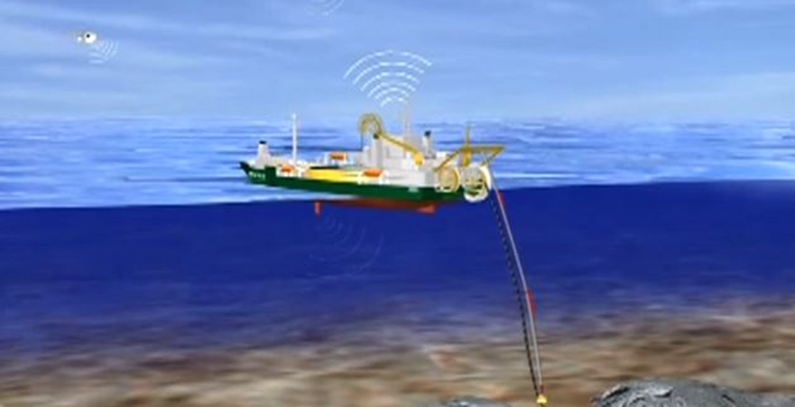
The transmission system operator for Italy’s CSUD zone is Terna, and its Montenegrin counterpart is CGES. The submarine power interconnector between the two countries was activated last month. The project was worth EUR 1.15 billion. Presidents Sergio Mattarella and Milo Đukanović formally switched the cable on.
The cable connects substations in Cepagatti, in the Italian province of Pescara, and Lastva, in the municipality of Kotor in Montenegro’s southwest. The link’s land portion is mostly underground. The capacity, now at 600 MW, should be doubled in the next few years with another cable.