


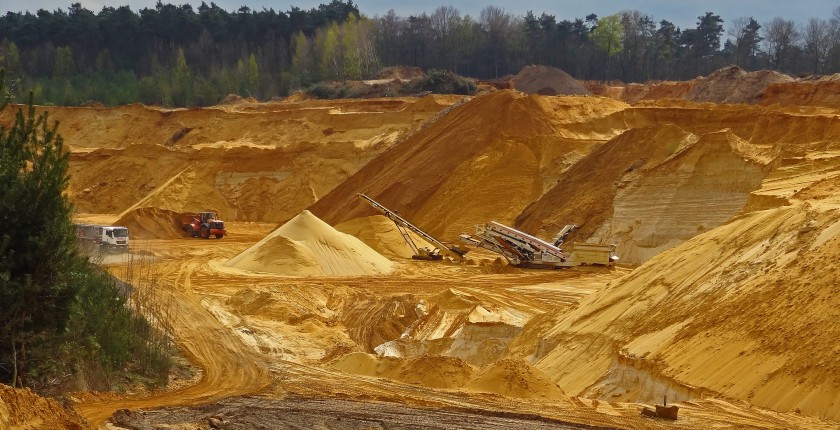
The plan for a lithium mine in Serbia is among the important projects for curbing China’s global influence and one of the ways for Europe to secure the supply of the crucial raw material, according to a secret list that Germany’s government drafted and sent to the European Commission in support of the EU’s geopolitical initiative Global Gate.
The confidential document, promoted by Germany and seen by Handelsblatt, could be the key proof that the Rio Tinto project for the exploitation of jadarite in the Jadar valley in Serbia enjoys political support from European countries. The list justifies the fear of all those that are pointing to the potentially devastating effects of the project on the environment and people and claim that the formal abolishment of the project in January was just a sham.
However, it is not the first time that the government in Berlin mentioned the plan as former Chancellor Angela Merkel once said her country is interested in lithium from Serbia.
The EU wants to invest EUR 300 billion worldwide under the Global Gate initiative
The list of 20 investments refers to the Global Gateway initiative, which was launched by the EU as a countermeasure to China’s Belt and Road corridor for investment around the planet.
The European Union intends to invest EUR 300 billion under the proposed scheme by 2027. The funds will be secured by the European Commission, EU member states, the European Investment Bank (EIB), European Bank for Reconstruction and Development (EBRD) and the private sector.
China’s initiative is creating a network of states that are becoming politically dependent and indebted
The proclaimed priorities are digitalization, climate and energy, transport, health, and education and research.
According to Germany’s secret list, a lithium mine in Serbia, a railway from Burkina Faso to the port of Takoradi in Ghana, and a data transmission cable between Chile and Australia are among the projects in which the German ruling coalition sees the potential to lower China’s global influence.
China produces 65% of battery-grade lithium materials
The world’s most populous nation is building highways, ports and railway lines all over the world, and creating a network of countries that are politically dependent on China, and indebted through its international loans. The network extends as far as Europe, the media outlet reported.
Of note, China today produces 85% of rare earths, which are found in electric vehicles (EVs) and wind turbines, and 65% of battery-grade lithium materials.
Wind farms and solar power plants will be built in the Balkans
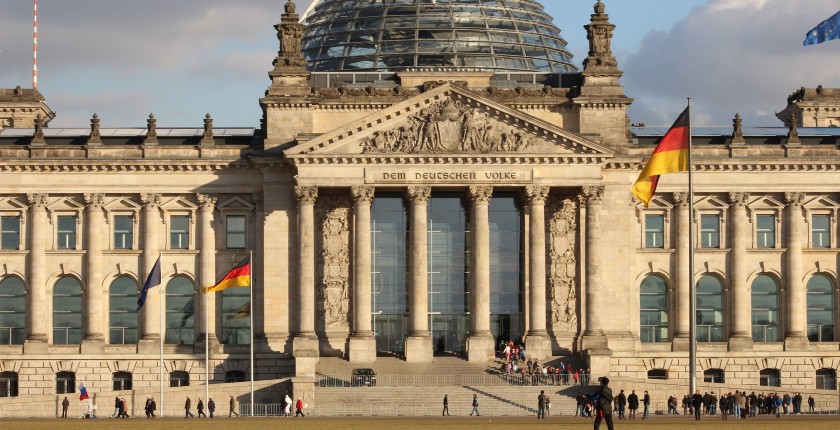
Germany is now proposing projects including a large solar power plant in Botswana and Namibia, a railway between landlocked Burkina Faso and the coast of Ghana and a wind farm near Accra, the capital of Ghana.
According to the German newspaper, the Balkans should also be in focus of the Global Gateway. A wind farm would be built in Bosnia and Herzegovina, and lithium exploitation would be promoted in Serbia in order to strengthen European battery production and reduce dependence on China for raw materials.
The initiative is aimed at strengthening the EU’s influence in Asia through the construction of roads between Laos, Vietnam and Thailand, and projects in Uzbekistan. A similar proposal is made for Latin America, which is rich in raw materials needed for green technologies.
Von der Leyen: Investments in infrastructure are at the heart of today’s geopolitics
On December 12, the same day that the list was revealed, the first meeting of the Global Gateway Board was held in Brussels. Ursula von der Leyen, president of the European Commission, said the initiative is above all a geopolitical project intended to position Europe in a competitive international market.
Global Gateway is a critical tool, because infrastructure investments are the heart of today’s geopolitics, she added.
As an example of projects that are part of the initiative in the energy sector, the European Commission pointed to the Trans-Balkan Electricity Corridor, which is set to connect the electricity transmission systems of BiH, Montenegro, and Serbia, with Croatia, Hungary, Italy, and Romania. There are also plans for photovoltaic plants in Albania, Kosovo*, and North Macedonia, and wind farms in North Macedonia and Serbia.
Comments (4)
Lola
Neka nemci kopaju litijum u svom dvoristu ionako ga ima vise tamo nego u Srbiji!
Србијанка
Газили су Србију одувек али су ђонове у њој и истрошили. Господи помилуј
Ненад44
Дођите, дођите…историја је на вашој страни 😉
Milica
If it is safe, do the mining in your own country!