





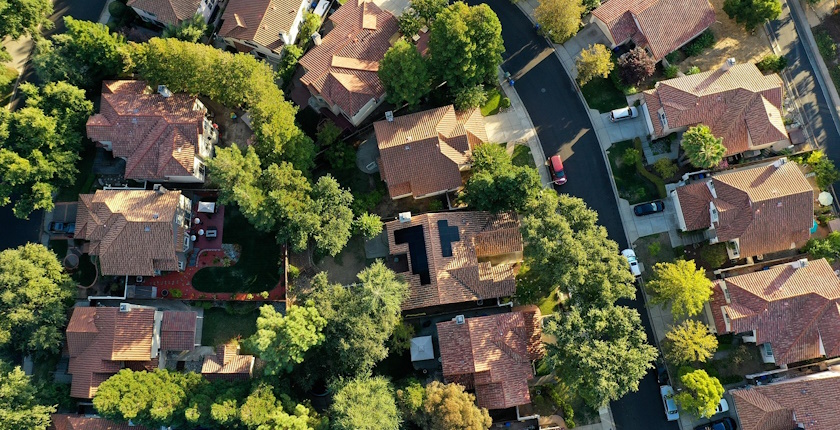
Photo: hamlinjandrew from Pixabay


Share


A total of 43 project ideas from 28 local authorities for establishing the first renewable energy communities in Bosnia and Herzegovina have been pre-selected to receive assistance under the EU for Collective Action for Energy Transition project.
The EU for Collective Action for Energy Transition (EU4CAET) project is jointly financed by the European Union and the German Federal Ministry for Economic Cooperation and Development (BMZ). Under the slogan ‘Together for Energy Transition,’ the EUR 3 million project is implemented by GIZ.
The initiative aims to empower local municipalities, citizens, and private actors to develop sustainable energy solutions that create jobs, improve energy efficiency, and advance climate goals, according to the EU Delegation to Bosnia and Herzegovina.
A total of 51 municipalities submitted 89 project ideas
In the project’s development phase, 51 municipalities submitted a total of 89 project ideas, such as solar power plants, heat pumps, biomass heating systems, public lighting upgrades, and electric vehicle charging stations.
The proposed projects also included kindergartens, youth centers, sports halls, theaters, health centers, and other public facilities. Following the evaluation, 28 local self-governments submitted their first concept notes, and 43 ideas were pre-selected.
“The final selection, based on detailed concept notes, is currently ongoing. The number of final projects will depend on the quality of submitted concepts and available funding under EU4CAET,” the Communication Office of the Delegation of the EU to BiH & EU Special Representative in BiH told Balkan Green Energy News.
The evaluation will begin in January 2026
The deadline for the pre-selected local authorities to submit their detailed concept notes was December 20. The evaluation of the submitted concepts will begin in January 2026.
Selected local authorities will be invited to present and discuss their ideas in more detail, according to the Communication Office.
The strongest concepts will receive assistance for capacity development, business planning, feasibility studies, and the preparation of technical design documentation.
The 28 municipalities pre-selected for further evaluation are as follows: Bijeljina, Bileća, Centar Sarajevo, Doboj, Donji Vakuf, Drvar, Goražde, Ilijaš, Kakanj, Kalesija, Laktaši, Maglaj, Milići, Modriča, Mostar, Novi Grad, Novi Travnik, Novo Sarajevo, Šamac, Sokolac, Srebrenica, Teslić, Travnik, Višegrad, Vogošća, Zenica, Živinice, and Zvornik.
BiH does not yet have renewable energy communities, but one of its two entities – the Republic of Srpska – managed to adopt the necessary regulations for their establishment in May this year, becoming the first in the region to do so.
Hahr: The grant call is planned for February 2026 and 2027
Mareike Hahr, Head of EU4CAET, said the project is now focused on tailored technical assistance to further refine the ideas and prepare high-quality applications for the grant call, planned for February 2026 and 2027.
“What has been particularly encouraging is the remarkable level of interest and readiness shown by local communities from both entities to ‘enter new terrain’—to propose their own project concepts, explore innovative solutions, and actively shape their energy future,” she explained.
Be the first one to comment on this article.