






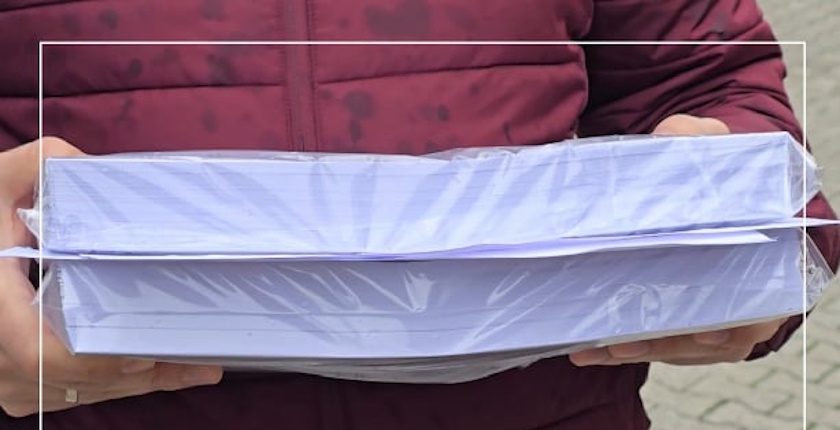
Photo: Eko Straza/X


Informal environmentalist organization Eko Straža has submitted a letter to the Delegation of the European Union to Serbia urging the EU not to grant strategic status to Rio Tinto’s Jadar project in the country. The letter opposing the lithium mining and processing project is backed by the signatures of 100,000 citizens.
Bojan Simišić of Eko Straža said the signatures had been submitted because of the European Commission’s upcoming decision on strategic projects to produce critical raw materials in third countries. The decision is expected to be adopted this week, Fonet reported.
The letter, supported by 100,000 signatures, is the first concrete step by environmental associations and citizens after the announcement that the EU could grant Jadar the status of a strategic project. The site of Rio Tinto’s underground mine and processing unit is near the Western Serbian city of Loznica.
The EU has adopted the first list of strategic projects
On Tuesday, the European Commission approved the first 47 strategic projects, within EU territory, for the production of critically important raw materials. According to the announcement, the decision on the potential selection of proposals for facilities in third countries will be adopted at a later stage.
Under the EU’s Critical Raw Materials Act (CRMA), such strategic projects are eligible for administrative and financial support.
Shortly after the decision was announced, Serbian President Aleksandar Vučić said that within seven or eight days, the EU would also declare the Jadar lithium project as strategic. He made the claim the same evening in Brussels, where he met with the bloc’s top officials.
Eko Straža: If the EU designates Jadar as strategic, protests will follow
Eko straža stressed that the EU does not have jurisdiction to designate Jadar as a strategic project. The organization also pointed out that Jadar was canceled by the Serbian government’s decision in 2022.
“If the EU puts the Jadar project on its list of strategic projects, we will press ahead with protests. However, we will no longer address the Serbian government, which has resigned, but will instead turn to international institutions,” said Eko Straža.
Balkan Green Energy News has compiled a chronological overview of the most important events concerning Jadar since 2001, when Rio Tinto established a subsidiary in Serbia.
Be the first one to comment on this article.