


Although the 2021-2023 global energy crisis has ended, its consequences will be felt for a long time to come. One example comes from Croatia, where the state-owned power utility has decided to take out a EUR 400 million loan.
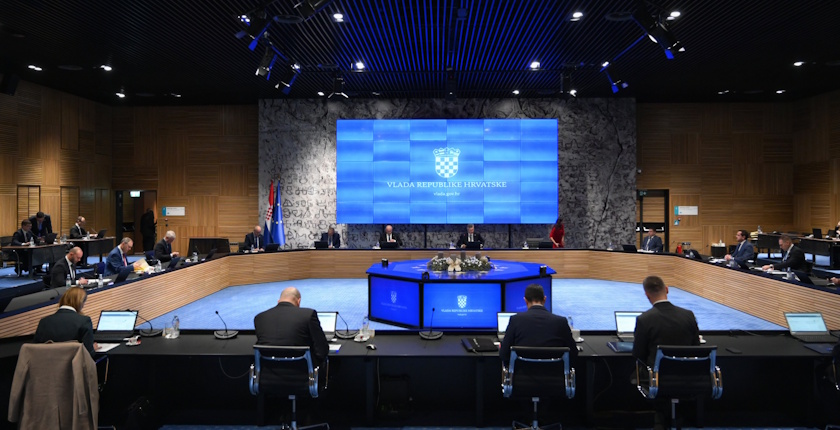
The Croatian government has given the green light for a EUR 400 million loan from seven banks for Croatia’s state power utility, Hrvatska Elektroprivreda (HEP), to partially refinance a EUR 600 million revolving credit and cover general operating expenses.
In its decision, the government explained that the new loan would not be backed with state guarantees. It will be used to refinance the remaining debt from the long-term club revolving loan of up to EUR 600 million, which was up to 80% secured by state guarantees, the decision reads.
The government recalled that this loan had been approved to ensure the country’s energy supply.
HEP borrowed EUR 1 billion in 2022
The transaction will release the total amount of the debt under the state guarantee, which currently amounts to EUR 424.8 million, according to the government.
The EUR 600 million loan was taken out in mid-2022, as the energy crisis was picking up pace. The funds were intended to finance the purchase of electricity, natural gas, coal, and heat. At the same time, the government approved taking out a further EUR 400 loan to buy natural gas for the Okoli storage facility.
The largest chunk of the new loan, EUR 140 million, will be provided by Zagrebačka banka, while Intesa Sanpaolo is lending EUR 62 million.
Also, EUR 50 million each will be disbursed by Erste & Steiermärkische Bank and two Croatian state-owned banks – the Croatian Bank for Reconstruction and Development (HBOR) and Hrvatska Poštanska Banka. Raiffeisenbank Austria will add another EUR 20 million.
Šušnjar: A more favorable interest rate has been agreed
The loan’s drawdown period is six months from the date of the loan agreement. HEP has been granted a 12-month grace period for loan repayment. The annual interest rate is fixed at 2.50%.
Minister of Economy Ante Šušnjar underlined that the existing loan was partially repaid from HEP’s own funds. The new EUR 400 million loan will be used to refinance the remaining debt, he added.
The contracted interest rate is much lower than with the previous loan, as are the fees, which will have a positive impact on HEP’s cash flow, Šušnjar pointed out, according to local media.