






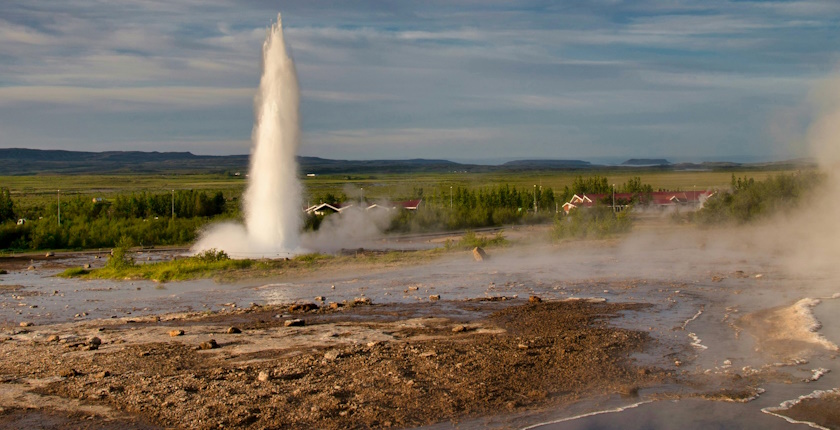
Photo by Koen Swiers/Pexels


Croatia has launched geothermal energy exploration near six cities, with an overall budget of EUR 50 million.
Geothermal exploration is included in the National Recovery and Resilience Plan (NRRP or NPOO) as one of the key energy projects. As part of the plan, the Croatian Hydrocarbons Agency was granted EUR 50 million for the exploration of geothermal energy near six Croatian cities, Zelena Hrvatska reported.
Martina Tuschl, Director of the Geothermal Energy Sector at the agency, shallow geothermal waters with a temperature suitable for energy production are Croatia’s advantage over other European countries. In her words, the benefit lowers costs and shortens the time of project implementation.
If exploration is successful, the cities could use thermal energy for heating
This positions Croatia as an attractive destination for the development of geothermal energy, she asserted.
According to Tuschl, exploration is being conducted near Vinkovci, Vukovar, Osijek, Sisak, Zaprešić, and Velika Gorica. If there is a positive outcome, the cities could use thermal energy to heat households, local institutions, and companies, she added.
The completion of the project is planned for June next year
So far, four exploratory wells have been drilled. In a few days, drilling will begin near Velika Gorica, followed by Osijek, Vinkovci, and Zaprešić. They are wells that would be used for heating.
The completion of the project is planned for June next year. By then the geothermal energy potential for each city would be determined.
There are 12 production areas in Croatia
According to the agency’s data, there are currently 12 production areas and 24 exploration areas for geothermal waters in Croatia.
Companies founded by local authorities control 13 exploration areas, with the priority of developing geothermal energy for heating. Four investors intending to produce electricity hold six exploration areas.
Electricity production is also planned in six production areas.
The biggest investors are ENNA and Soyak
The National Energy and Climate Plan (NECP) sets a 68 MW target for 2030. However, for now, only one geothermal power plant with a capacity of 10 MW is operational.
The largest investors in the geothermal sector are Soyak Energy and ENNA Group, with a total investment of EUR 55 million.
Of note, on March 3 and 4 Croatia will host the Geothermal Investment Forum Croatia 2025. It will be the first international conference in the country dedicated to geothermal energy.
Be the first one to comment on this article.