


The construction of a district heating pipeline from REK Bitola has begun, almost forty years after the thermal power plant was built. North Macedonia is preparing to shut down the coal plant and mining complex and replace it with a gas-fired power plant.
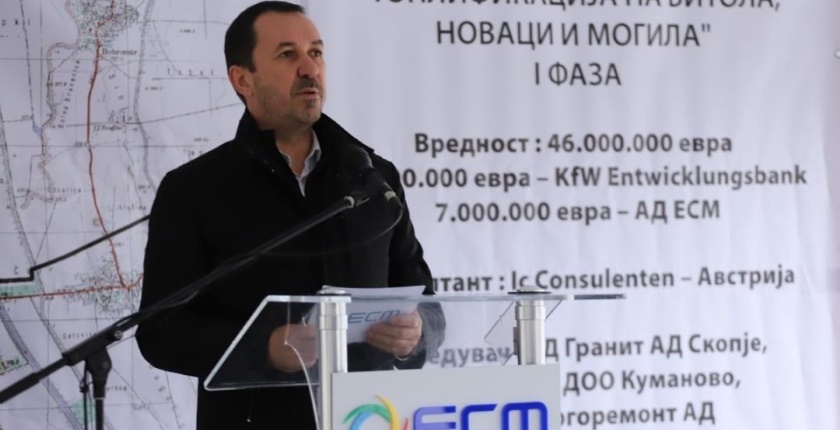
The construction of a district heating pipeline for Bitola, Mogila and Novaci has started. The system will use thermal energy from the thermal power plant in the REK Bitola coal hub.
Chief Executive Officer of Elektrani na Severna Makedonija or ESM Vasko Kovačevski said 35 government and municipal institutions in the city of Bitola would be connected, using one third of the capacity. The rest is for residential and business buildings, including in Novaci and Mogila, in his words.
District heating system to be switched to gas
The head of the state-owned power utility said the new system would largely eliminate the use of polluting fuels. The municipalities of Novaci and Mogila rely on agriculture, so the pipeline will also enable heating for greenhouses and other facilities, according to Kovačevski.
The strategy is to replace part of the capacity of REK Bitola with a cogeneration gas power plant, which means it will produce both electricity and heat. The property issues along the route of the pipeline are being resolved by expropriation, Kovačevski asserted. The heating substation in Bitola was supposed to run on heating oil, but it will use natural gas, he revealed.
North Macedonia has vowed to phase out coal by 2027.
Pipeline brings lower prices
Minister of Economy Kreshnik Bekteshi claimed the district heating system would bring lower prices than for other energy sources.
The project was made possible with a loan from Germany’s KfW Development Bank of more than EUR 40 million, while ESM is investing EUR 7 million from own funds, the government said. The contractor has two years to lay the pipes from REK Bitola to Bitola and to establish a distribution network in the city.
The coal plant is 12 kilometers from the city. Ekonerg from Croatia started the feasibility study in 2012, according to information on ESM’s website.
Comments (1)
Zoran Stajić
Could you tell more technical details? You are using hot water from power plant directly? What is the temperature of hot water you are using for district heating?