






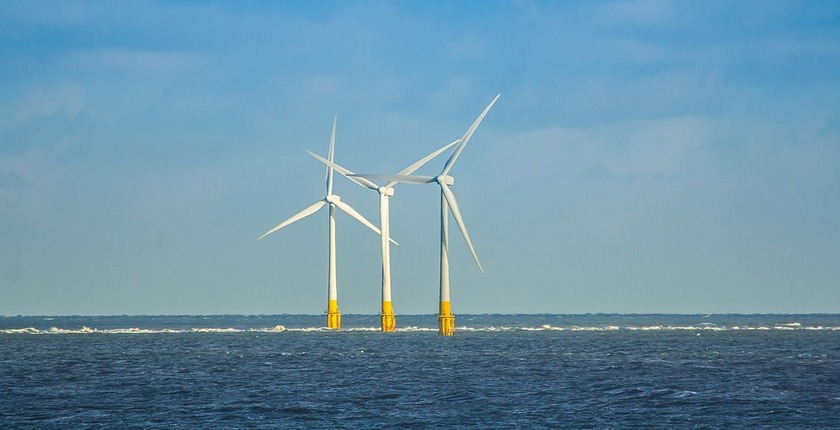
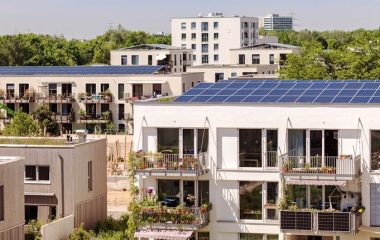
Photo: diego_torres from Pixabay


Albania is working on an offshore wind project supported by the European Bank for Reconstruction and Development (EBRD), according to Minister of Infrastructure and Energy Belinda Balluku. The project is currently in a study phase, she said.
Prime Minister Edi Rama was recently quoted as saying that the country was “moving forward and going further with the study on wind energy” and that it “will benefit from additional amounts of energy from offshore production.” Rama, who was speaking at an EBRD summit in London, said that Albania was also exploring hydrogen production through solar parks.
Albania is running a tender for 100 MW of onshore wind farms
Albania currently has no wind power capacity, despite its vast potential. However, it launched a two-stage bidding process in mid-2021 for a total of 100 MW of onshore wind farms, and the initial quota might be increased to 150 MW.
Prospective developers can apply for projects of between 10 MW and 75 MW and the successful bidders will be awarded 15-year power purchase agreements at a fixed price. The plan is to approve the contracts by the end of June 2023.
Also, the Ministry of Infrastructure and Energy earlier received applications for five zero-subsidy wind power projects of 10 MW each, to be built in the Karaburun Peninsula in the southwest.
IRENA: Albania has the potential to deploy 616 MW of wind power capacity by 2030
In a report published last year, the International Renewable Energy Agency (IRENA) estimated Albania’s cost-effective solar and wind potential at over 7 GW, which is more than three times the country’s total installed electricity generation capacity. Around 616 MW of the wind energy potential is deployable by 2030, according to the IRENA report.
Balluku: the construction of the 140 MW Karavasta solar park begins in March
Speaking at a joint press conference with Rama earlier this week, Balluku also announced that the construction of the Karavasta solar park would begin during March and that it should be completed within 12 months. The 140 MW solar park will be one of the largest in Europe, according to Balluku.
In January, Albania’s transmission system operator, OST, said that wind and solar power plants connected to its network should reach a combined 220.4 MW in 2023, an almost tenfold increase from the current capacity.
Albania has one of the highest shares of renewable energy in Southeastern Europe thanks to its vast hydropower capacities, but it is also highly dependent on annual rainfall, which often forces it to import electricity.

Greetings, I’m very much interested in your project, education please send me all the details other requirements thank you,