





Photo: Balkan Green Energy News


Despite the long-standing consensus that grids are essential to the energy transition, their development and modernization are lagging throughout Europe, while in the Western Balkans, these efforts have barely begun. Market participants from across the region have differing views of the current situation: aggregators and system solution providers see business opportunities, while a distribution system operator believes it must reconcile conflicting demands – security of supply on the one side and renewables integration and flexibility services on the other. These are some of the key takeaways from a panel held as part of Belgrade Energy Forum 2026 (BEF 2026).
It is reassuring that everyone sees security of supply and resilience as top priorities, but the rise of data centers has further complicated the situation.
One of the possible solutions is better planning, specifically coordination in planning between those who set the targets – politicians – and those who are supposed to ensure they are met – transmission and distribution system operators.
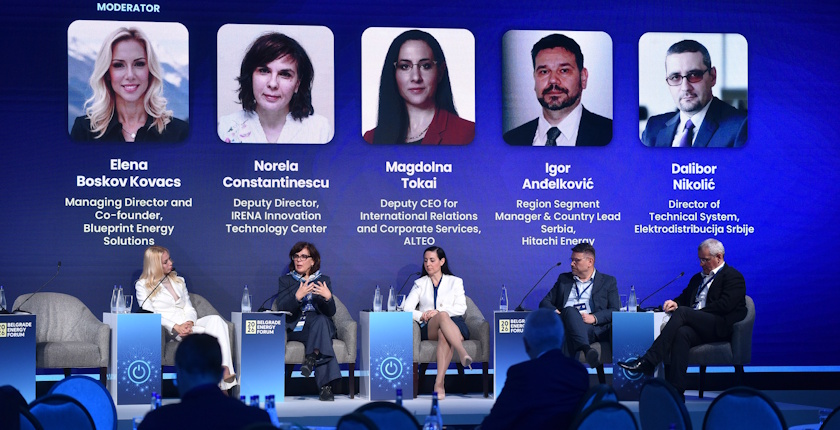
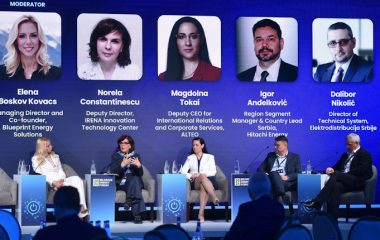
These topics were discussed at the panel titled Building a Balanced Power System: Flexibility, Digitalisation, AI and Market Design, which was moderated by Elena Boskov Kovacs, Managing Director and Co-founder of Blueprint Energy Solutions.
Panelists:
- Norela Constantinescu, Deputy Director, IRENA Innovation Technology Center
- Magdolna Tokai, Deputy CEO for International Relations and Corporate Services, Alteo
- Igor Anđelković, Region Segment Manager & Country Lead Serbia, Hitachi Energy
- Dalibor Nikolić, Director of Technical System, Elektrodistribucija Srbije
What is a balanced system?
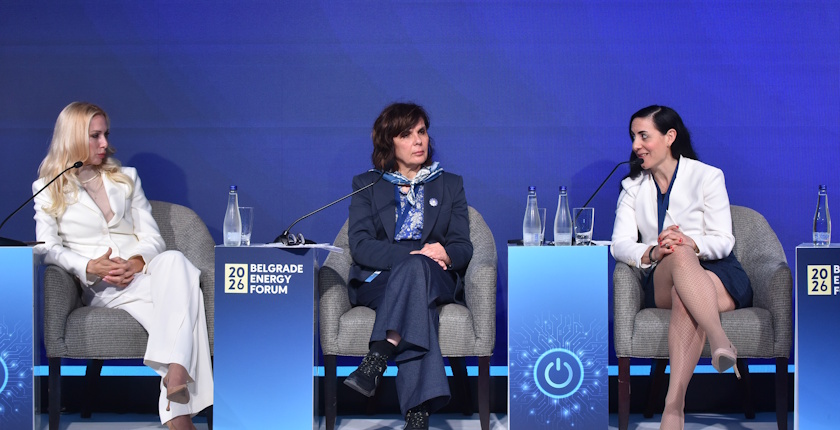
Elena Boskov Kovacs, Norela Constantinescu, and Magdolna Tokai (photo: Balkan Green Energy News)
The International Renewable Energy Agency (IRENA), explained Norela Constantinescu, views a balanced system in the shorter term as one that ensures security of supply and resilience.
The deployment of renewables, she stressed, should not be an end in itself. Their integration and flexibility are equally important, according to her.
When it comes to achieving a well-balanced system in the medium and longer term, she advises that dependence on fossil fuels should not be replaced with dependence on other technologies.
“To avoid those dependencies as much as possible, countries should ensure the local value creation,” according to Constantinescu.
Hungarian company Alteo provides system balancing services as an aggregator. The company has a portfolio of conventional and renewable energy power plants. It owns facilities with a total capacity of about 250 MW and manages assets totaling 2,000 MW.
An energy system is balanced if it is stable and resilient
Alteo has Artemis, its proprietary system based on artificial intelligence (AI) and machine learning, which performs the aggregation. Magdolna Tokai says the company is one of the major service providers for MAVIR, the Hungarian transmission system operator (TSO).
According to her, a system is balanced when there is a balance between the market and policy, when electricity supply and demand are met every single second, and when there is a coal phaseout without disruptions.
All these together make a balanced system enabling the right energy transition without distortions, she said.
Hitachi Energy, a technology leader, innovator, and provider of system solutions, products, and services, considers an energy system balanced if it is stable and resilient.
As a market leader, the company would like to see a faster integration of renewable energy sources into the grid, which could be made possible by simplified regulatory frameworks. As Igor Anđelković pointed out, regional grids would then also begin to develop, as they already have in neighboring countries and across Europe.
The region must prepare for change
“The flow of energy used to be one-way, but grids are changing, the market is changing, and we must adapt. The Western Balkans are still conventional, but change is inevitable,” Anđelković said.
He believes the region must be better prepared. As an example, he cited the European Union’s Carbon Border Adjustment Mechanism (CBAM), arguing that it caught everyone off guard, even though they had three to five years to prepare.
For Elektrodistribucija Srbije (EDS), Serbia’s distribution system operator (DSO), security of supply always takes priority, Dalibor Nikolić pointed out.
Unfortunately, investment in the distribution system has not kept pace with the ambition and the need for greater integration of renewable energy sources, he said.
Serbia’s distribution network, built in the 1970s, 1980s, and partly in the 1990s, is largely outdated, as it was originally designed to meet the consumption needs of that time.
Renewable energy sources, in some sense, are harmful to the system
“Variable energy sources arrived alongside fairly rapid changes in the regulatory framework, and for all of us, including the DSO, this occurred within a short period of three to five years. In Western European countries, this was a process that lasted a decade or even a decade and a half,” Nikolić explained.
He stressed that a major challenge is to achieve a balance between investing in grid development to increase security of supply and creating conditions for future providers of balancing services and for the connection of renewable energy sources.
According to him, these are conflicting demands. On the one hand, there is the ambition to decarbonize and increase the share of renewable energy as much as possible.
“On the other hand, these sources, in a sense, are harmful to the system, as they reduce inertia and resilience and make both the distribution system and, to a large extent, the transmission system more sensitive to weather events and short-term disturbances,” Nikolić said.
Who will pay for investments in flexibility?
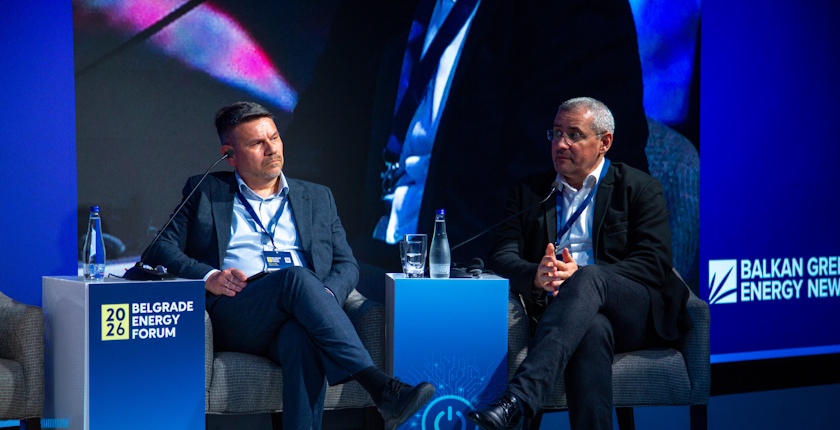
Igor Anđelković and Dalibor Nikolić (photo: Balkan Green Energy News)
Elena Boskov Kovacs noted that there is always the question of how to secure financing, in this case, for investments in distribution networks.
Norela Constantinescu said the question should perhaps be reframed as: “Who is paying for the lack of flexibility?”
IRENA’s assessment has shown that flexibility needs are expected to increase 6 to 10 times by 2050, and about fivefold by 2030, she recalled.
“It sends a political message to governments that when looking at the deployment of renewables, there is a need to integrate flexibility into the planning of the operation of energy systems,” she emphasized.
The portfolio of flexibility solutions includes ancillary services, arbitrage, congestion management, and voltage regulation.
Flexibility is an insurance policy for the electricity market
The situation is mitigated by a 90% decline in the cost of installing battery energy storage systems (BESS) over the past ten years. Constantinescu believes that other measures should be taken into account as well, such as interconnections, which can reduce flexibility needs by around 20%. Of course, there is also long-duration energy storage at pumped storage hydropower plants and, hopefully, hydrogen at a later stage, according to her.
Magdolna Tokai says that consumers always pay in the end, but that it is important to make these costs transparent and ensure that everything is implemented efficiently.
Alteo currently has the largest battery in Hungary, of 50 MW, which was recently put into operation. Tokai noted that an analysis of battery storage projects in the region, including Romania and Poland, shows that there is no single model.
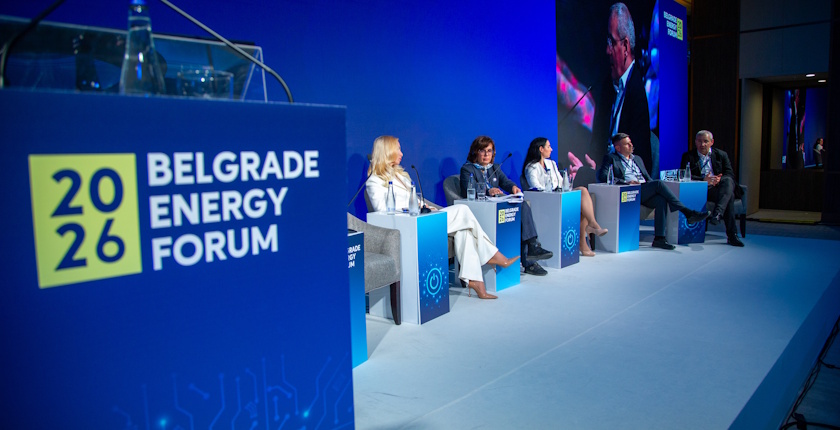
Photo: Balkan Green Energy News
Tokai sees flexibility as an insurance policy for the electricity market, but notes that this policy comes with a premium. “However, it is always better to pay upfront, than later when you are in a crisis,” she said.
Dalibor Nikolić is in favor of finding a fair solution, with those who benefit from or require flexibility bearing the greatest share of the costs. In some cases, this may be the DSO, in others a trader, aggregator or transmission system operator, or indeed the users of the distribution system.
At the end of the day, he is convinced, the distribution system will bear the greatest share of the burden.
Planning should not be reduced to numbers dropped onto the market
He noted that variable energy sources in Serbia are currently not subject to grid fees, while they create system costs ultimately paid by end consumers through electricity bills.
Elena Boskov Kovacs believes that what troubles DSOs is a problem of institutional planning.
This planning should start much earlier, and should be linked to green ambitions and ambitions concerning flexibility, according to her. Planning, she added, should not simply be a number dropped onto the market. It should involve all relevant actors – the DSO, the transmission system operator, and all those responsible for implementing targets set at a high level, she explained.
Nikolić agreed and added that the only source of revenue for DSOs is the grid fee, which is paid by end consumers. He said this requires formulating a sustainable solution, and warned that otherwise it could lead to financial collapse, primarily of DSOs.
Data centers are already here
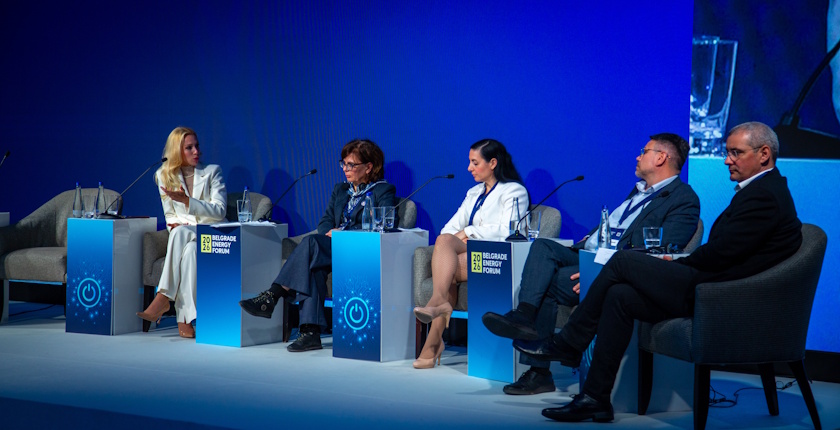
Photo: Balkan Green Energy News
Igor Anđelković is convinced that data centers are already the present – maybe not yet in the Western Balkans, but certainly in Europe and the United States, where they are a dominant trend and topic.
He believes that all data centers must rely on stable and, above all, green sources of electricity. Hitachi Energy’s solution for data centers is its energy hub concept.
It involves connection to the transmission system via conventional substations, while ensuring resilience to fluctuations alongside energy generation. Power quality solutions ensure reliable operation of data center systems, as well as the grid itself. “We must ensure a transformation where data centers are no longer mere consumers of electricity, but a factor in the energy system stability,” Anđelković explained.
For Alteo, as an aggregator, data centers represent a business opportunity.
Emerging complex energy systems cannot be managed without automated support
As an aggregator, Alteo would seek to include them in its portfolio and balance supply and demand in real time, according to Magdolna Tokai.
In addition to their impact on energy production and consumption, data centers also bring artificial intelligence, which all market participants can benefit from.
Norela Constantinescu is convinced that such complex systems, with distributed energy production and consumption, as well as flexibility, cannot be managed without automated support to decision-making.
Magdolna Tokai says that for Alteo, AI is not just a plan for the future, but something the company has been implementing over the past few years. Alteo uses AI for forecasting, trading, asset maintenance, and the optimization of its portfolio, which includes gas-fired power plants, hydropower plants, batteries, wind farms, and solar parks.
The Artemis system has been spun off into a separate firm, but remains linked to physical assets and to the part of the company that provides energy services, balancing, and system management, creating a “special kind of symbiosis,” according to Magdolna Tokai.
According to Dalibor Nikolić, Serbia’s DSO is still at the early stages of adopting AI. Currently, Elektrodistribucija Srbije sees plenty of room for its application in optimizing warehouse inventories, planning grid development, and energy balance forecasting.
Be the first one to comment on this article.