







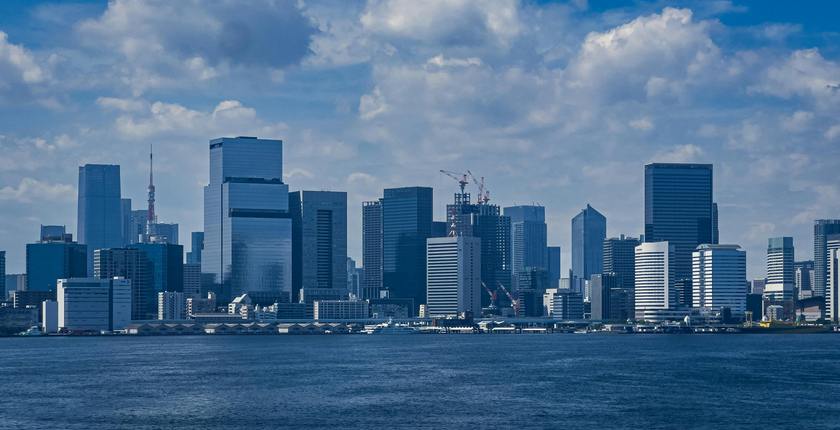
Photo: Pexels


The authorities of Japan’s capital, Tokyo, plan to develop a project for a floating offshore wind farm with a nameplate capacity of 1 GW, which would be by far the largest such facility in the world. Currently, the biggest floating wind farm in operation is the 94.6 MW Hywind Tampen in Norway.
The proposed floating offshore wind farm off the Izu Islands, part of the Tokyo Metropolis, is targeted for completion by 2035. It would supply electricity to island communities as well as the city itself via a network of subsea cables.
Although its planned nameplate capacity of 1 GW is roughly equivalent to that of a single nuclear reactor, the facility would likely operate at a capacity factor of around 40%, which is typical for offshore wind farms.
The authorities in Tokyo expect that the future wind farm could supply some 850,000 households.
Currently, project activities are limited to seabed soil analysis, topographic mapping, and weather pattern assessments, with analysts in Japan expressing caution about the 2035 completion target, according to reports.
The project supports Japan’s ambition to reach 45 GW of offshore wind capacity by 2040. The country’s cumulative installed wind power capacity, both onshore and offshore, stood at about 6.43 GW as of December 2025, according to data from the Japan Wind Power Association (JWPA).
Japan hopes to reach 45 GW of offshore wind capacity by 2040
Japan’s first commercial floating offshore wind farm, Goto, entered full operation in January this year. It has a capacity of 16.8 MW.
The world’s largest floating wind farm at the moment, Hywind Tampen off the Norwegian coast, became fully operational in 2023. It was built by Equinor, which also installed the first offshore floating wind farm in the world, Hywind Scotland.



Be the first one to comment on this article.