







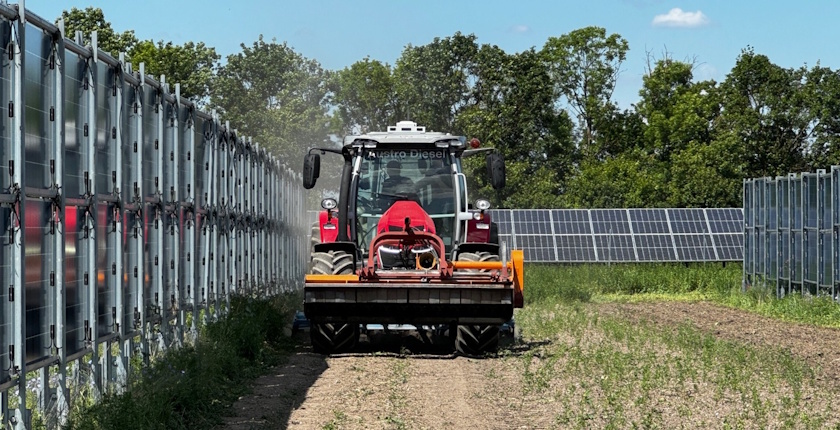
Photo: Jim Bim


Author: Jiri Bim, EUSEW Digital Ambassador, Head of permitting and agrivoltaic section of the Czech Solar Association
Across Europe, the race to decarbonise energy systems often collides with land-use concerns and slow permitting processes. Agrivoltaics offers a promising solution: combining solar energy generation with agricultural production on the same land. Drawing from my experience accelerating renewable energy permitting in the Czech Republic, I explore how agrivoltaics can support Europe’s clean energy transition while strengthening rural economies and energy security.
Europe’s decarbonisation targets require a rapid expansion of renewable energy while preserving land for food production and ecosystems. Agrivoltaics – the combination of photovoltaic systems and agricultural activities – offers a practical way to address this challenge. By enabling energy and food production on the same land, agrivoltaics increases land-use efficiency while contributing to the reduction of greenhouse gas emissions.
Across the European Union, electricity demand is expected to rise significantly due to electrification in transport, heating and industry. Solar energy will play a crucial role in meeting this demand. However, public acceptance and land availability are often barriers to large-scale deployment.
Agrivoltaic systems demonstrate that renewable energy deployment does not have to compete with agriculture but can support it. According to research by the European Commission’s Joint Research Centre, agrivoltaics could theoretically provide hundreds of gigawatts of solar capacity across the EU while using only a small share of agricultural land. In fact, deploying agrivoltaics on around 1% of Europe’s agricultural land could generate hundreds of terawatt-hours of electricity annually, illustrating the scale of this opportunity.
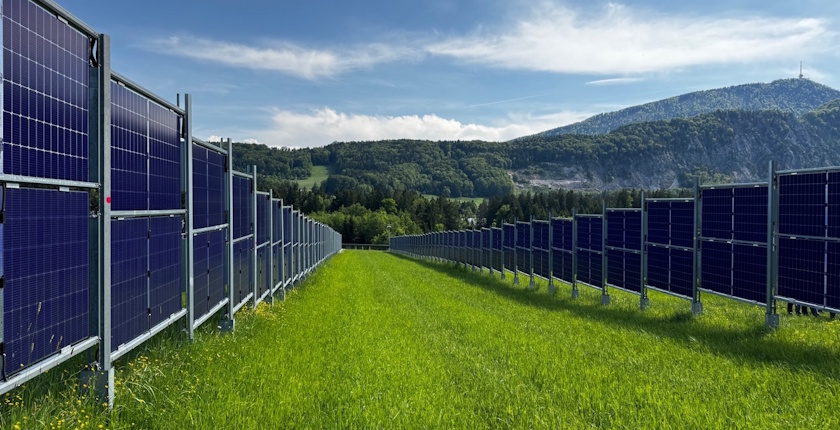
Importantly, the land footprint of agrivoltaics remains limited. Solar panels are typically elevated and spaced to allow continued agricultural production underneath. For farmers, agrivoltaics can therefore represent an additional income source while supporting adaptation to climate change and increasing the resilience of agricultural systems.
Lessons from the Czech Republic
In my work on accelerating renewable energy permitting processes in the Czech Republic, agrivoltaics has emerged as an important innovation. The country has historically faced regulatory barriers that have limited solar deployment on agricultural land. Through cooperation between industry experts, policymakers and farmers, a legislative pathway for agrivoltaics is now emerging.

Key milestones include policy discussions on land-use compatibility, pilot projects that demonstrate agricultural benefits, and growing awareness among decision-makers of the technology’s potential. These experiences show that clear permitting frameworks and well-defined technical standards are essential to scale agrivoltaic deployment.
The Czech definition of agrivoltaics is relatively straightforward. It specifies minimum structural heights for installations, defines the types of crops that may be cultivated underneath, and ensures that agricultural activity remains the primary land use. Agricultural monitoring and controls remain the same as for conventional farming.
Overall, the permitting process is similar to that for solar power plants, but with modifications so ensure the land remains within the agricultural land fund and continues to be used for agricultural production.
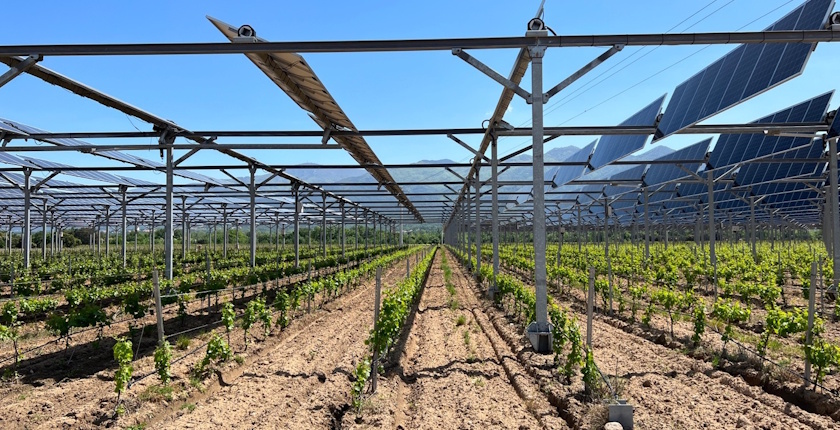
Early pilot projects are already emerging. One of the most notable initiatives is being prepared in South Moravia, one of the Czech Republic’s main wine-growing regions. The Czech energy company MND is developing a pilot agrivoltaic installation above vineyards to test how elevated solar panels can coexist with grape cultivation. The project will evaluate how partial shading from solar panels may protect vines from extreme weather events such as heatwaves and hail while maintaining agricultural productivity. Projects like this demonstrate how agrivoltaics can work in practice and provide valuable experience for future deployment.
A growing opportunity across Europe
While the Czech case highlights regulatory evolution, the opportunity extends across the entire European Union. Several European countries have already demonstrated how agrivoltaics can support agriculture under climate stress. In France, for example, agrivoltaic installations above vineyards are being tested to protect grape production from heatwaves, hail and drought. The panels provide partial shading that helps stabilise microclimates and reduce water stress in crops.
Similarly, projects in Italy are exploring agrivoltaic systems that combine solar panels with crop cultivation and livestock grazing in regions facing increasing water scarcity and extreme temperatures.
Carefully designed systems can therefore provide multiple benefits: reducing evaporation, protecting crops from extreme weather conditions, improving biodiversity and increasing land resilience. Across Europe, the agrisolar sector is expanding rapidly. Industry mapping initiatives already identify more than 200 agrisolar projects across Europe, demonstrating the growing momentum of this technology.
Sharing best practices across Europe can accelerate learning and avoid fragmented regulation. A coordinated approach will allow agrivoltaics to support the European Green Deal, strengthen energy independence and contribute to more resilient farming systems.
Recent EU policy developments increasingly recognise this opportunity. The European Commission’s Vision for Agriculture and Food and related EU farming strategies highlight the role of renewable energy in supporting farmers’ income diversification and climate resilience. Industry initiatives such as SolarPower Europe’s agrisolar guidelines are also helping to define best practices for combining agriculture and solar energy.
Accelerating the transition
To unlock the full potential of agrivoltaics, three priorities are essential.
First, permitting procedures must become faster and more predictable. Clear guidance on agrivoltaic design and land-use rules will help project developers and farmers move from concept to deployment more quickly.
Second, research and demonstration projects should continue to evaluate agricultural performance, biodiversity impacts and economic benefits. Evidence-based policymaking is crucial for scaling the technology.
Third, knowledge sharing between experts, policymakers and the public must be strengthened. As a Digital Ambassador for EU Sustainable Energy Week (EUSEW), I am motivated to share experiences from Central Europe and contribute to a broader European conversation on innovative renewable solutions.
Agrivoltaics is not only a technical innovation. It represents a practical pathway for Europe to accelerate decarbonisation while supporting farmers, strengthening energy security and using land more efficiently.
This opinion editorial is produced in co-operation with the European Sustainable Energy Week (EUSEW) – the biggest annual event dedicated to renewables and efficient energy use in Europe. #EUSEW2026 marks the 20th edition and will once again bring together the community of people who care about building a secure and clean energy future for the next generations.
Check the currently open calls to join.
Disclaimer: This article is a contribution from a partner. All rights reserved.
Neither the European Commission nor any person acting on behalf of the Commission is responsible for the use that might be made of the information in the article. The opinions expressed are those of the author(s) only and should not be considered as representative of the European Commission’s official position.



Be the first one to comment on this article.