







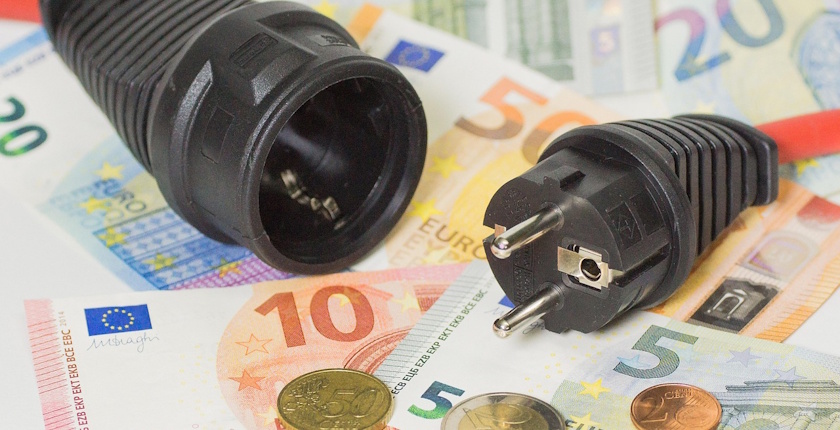
Photo: Alexander Stein from Pixabay


The Ministry of the Environment, Climate and Energy has published statistical data on reference electricity prices for households and non-household consumers on the Slovenian retail market for the fourth quarter and entire 2025.
The retail price for an average household in 2025 was EUR 95 per MWh or 4% less than in 2024, while for the average non-household consumer, it was EUR 181 per MWh, down 13% over the same period.
In the final quarter of 2025 alone, electricity prices decreased by 2% for households and increased by 6% for all other consumers. The majority of non-household consumers are businesses.
The electricity component for the average household in 2025 amounted to EUR 111 per MWh (excluding VAT) an average, rising 7% over the one-year period.
Households were exempted from the fee for renewables and high-efficiency cogeneration
Grid fees amounted to EUR 42.1 per MWh (excluding VAT) on average, 30% less than one year before.
Households were completely exempted in the first half of 2025, and partially in the second, from the fee for renewable energy sources and high-efficiency cogeneration. The surcharges amounted to EUR 5.2 per MWh (excluding VAT).
The excise duty for the average household was EUR 1.53 per MWh (excluding VAT).
In 2025, the share of the electricity energy component in the retail price for households was 56.9%, the share of grid fees was 21.6%, the energy taxes share was 2.7%, the excise duty share was 0.8%, and the VAT share was 18%.
For all other consumers, both the electricity component and grid fees decreased
For non-household consumers, the average electricity component in 2025 was EUR 116.7 per MWh (excluding VAT). It represents a decrease of 13%. Regulated grid fees also dipped 13%, to an average EUR 20.7 per MWh (excluding VAT).
Energy taxes amounted to EUR 9.5 per MWh (excluding VAT), which is 14% less than in 2024, while the excise duty was EUR 1.3 per MWh or 2% more than a year earlier.
The share of the electricity component was 78.7%, the grid fee share was 14%, the energy taxes share was 6.4%, and the excise duty share was 0.9%, excluding VAT, according to the ministry.
Be the first one to comment on this article.