





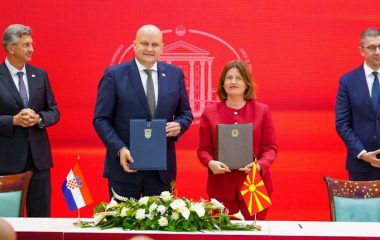
Photo: Government of North Macedonia


The Government of North Macedonia and Kazancı Holding have signed a memorandum of understanding that paves the way for a EUR 1 billion investment in the country’s energy sector.
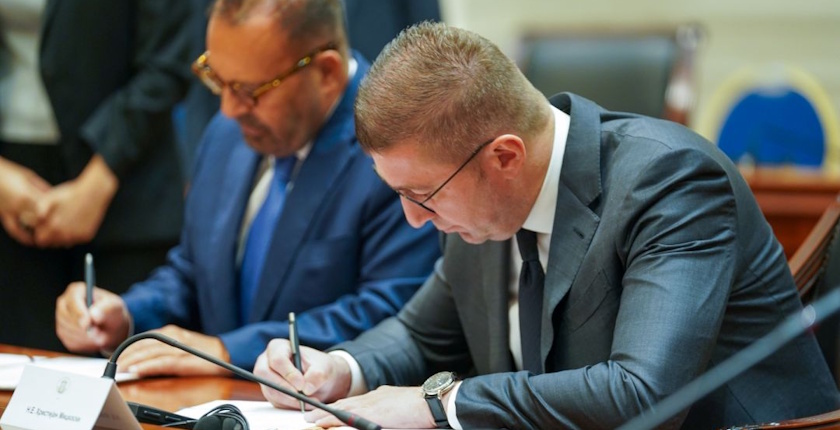
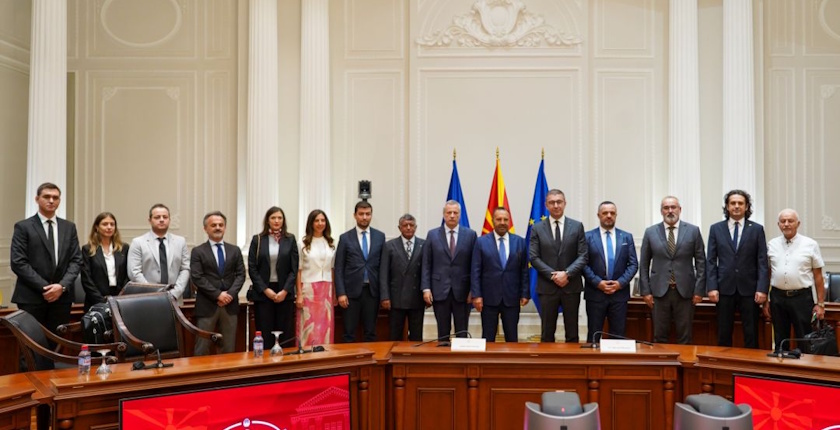
The memorandum of understanding was signed by Prime Minister Hristijan Mickoski and Cemil Kazancı, President of the Board of Directors of Kazancı Holding.
In February, Mickoski announced that the company would invest EUR 1 billion in gas power plants, gas and heat distribution grids.
Now he stressed that the memorandum demonstrates the country’s determination and plan to secure its energy sovereignty and protect its economic interests.
Mickoski: We are reducing import dependence and the impact of external price and political risks
According to the government, the document creates the conditions for a project with a long-term impact on the country’s energy sector.
It consists of three segments: development of new power production facilities, construction of natural gas and heat distribution grids, and implementation of measures to increase gas supply security, Mickoski explained.
In his view, a domestic energy source and a stable energy distribution system represent security, predictability, and control over one of the country’s most vital systems.
By developing domestic production facilities, North Macedonia is reducing its reliance on imports and minimizing exposure to external price and political shocks, the prime minister added.
Kazancı: The project is already prepared
Cemil Kazancı recalled that discussions about the investment began a long time ago. The project, in his words, is already prepared. Now research will be conducted, after which the implementation of the EUR 1 billion endeavor will start, he claimed.
It will be a strategic center in the Balkans, according to Kazancı. He expressed confidence that the project would be implemented shortly.
The government has not disclosed details of the memorandum with the company, which operates in the energy sector through its Aksa brand.
Earlier, Prime Minister Mickoski said the two sides were considering cogeneration facilities of 500 MW in combined capacity. They would produce 4.1 TWh of electricity and 720 GWh of heat per year.
The construction of a distribution grid for gas and heat would enable gas and heat to be distributed to as many citizens as possible.
Be the first one to comment on this article.