







Photo: freepik.com


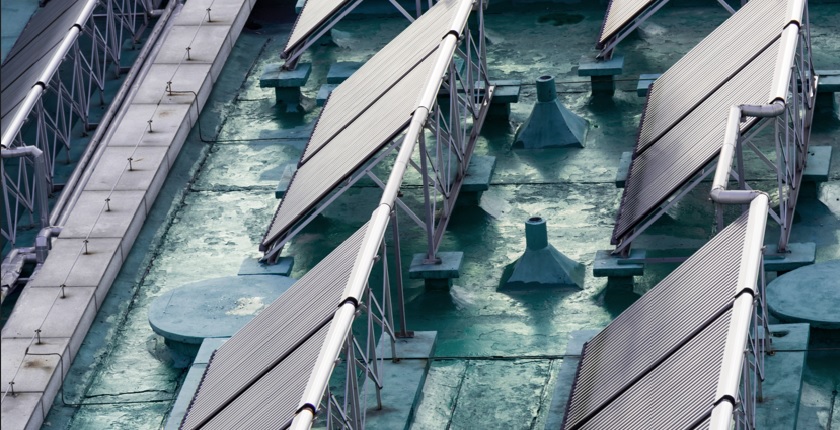
Greece and Cyprus, traditionally the biggest markets in the solar thermal segment in Europe, advanced to new record levels per capita.
The trend continued during and after the energy crisis, according to a new study by the Foundation for Economic and Industrial Research (FEIR or IOBE). The latest data, for 2023, shows Cyprus had 1,260 square meters of solar thermal systems per 1,000 residents and Greece followed with 520 square meters. Greece is second in Europe in total surface as well, with 5.44 million square meters for houses, according to Eurostat. The highest is Germany, with 22.42 million square meters.
IOBE said total installed surface in Greece is 5.7 million square meters with 96% being solar thermal rooftop collectors on houses and the rest commercial projects. Annual installations increased from 350,000 square meters in 2019 to over 460,000 square meters four years later.
The capacity of solar thermal energy systems in 2023 is estimated at 4 GW, the document reads.
Solar thermal systems covered 34.8% of household water heating in Greece back in 2021. Manufacturers of the equipment increased sales from EUR 193 million in 2019 to EUR 344 million in 2023, of which exports accounted for 62%.
Big savings in CO2 emissions and energy imports
According to the study, solar thermal installations saved 2.1-2.8 million tonnes of CO2 emissions in 2023, amounting to EUR 148 million to EUR 197 million. At the same time, they saved 4.9-6.1 million barrels of oil equivalent of energy imports, with a benefit of EUR 299 million to EUR 362 million for the Greek economy.
In the residential sector, solar thermal systems were used in 38.1% of households in 2023. The rate is projected to rise to 49% by 2050, according to the National Energy and Climate Plan (NECP). IOBE considers the goal low.
The authors of the study estimated that solar thermal could reach 60% by 2030 and 90% by 2050 through incentives such as reducing the tax.
Support program underway for solar thermal collectors
The Greek government recently introduced a new EUR 223 million support program for thermal collectors and heat pumps in houses. It supports the purchase of new solar heaters, covering 50% to 60%, depending on the applicant’s income.
The systems can be installed in primary or secondary residences. The program also takes into account the number of children, the location of the house and the local climate to determine the extent of the support. In previous schemes, the condition of the residential unit and its energy label were the primary considerations.



Be the first one to comment on this article.