







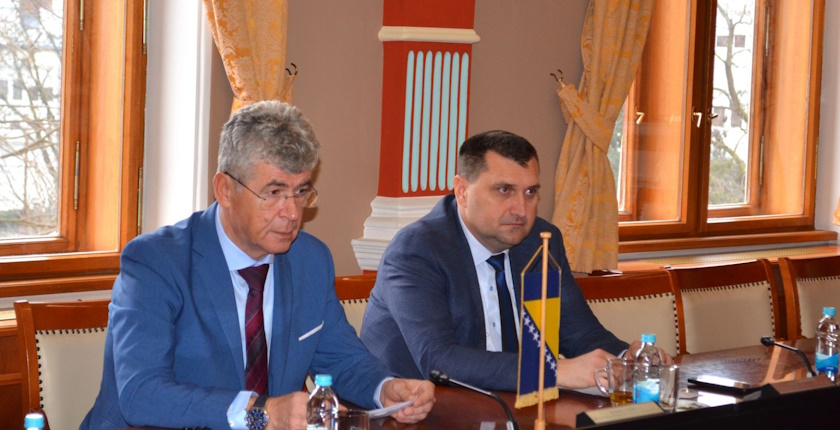
Photo: Brčko District of BiH


There will be no exploration and exploitation of lithium on the territory of the Brčko District in Bosnia and Herzegovina, mayor Zijad Nišić said.
Exploration and the potential mining of lithium has long been a major issue in neighboring Serbia. Lately, it gained importance in BiH as well. Rio Tinto’s Jadar project in Serbia was terminated two years ago, but only formally. There has been speculation over the past weeks that it could get fully back on track.
In BiH, investors have expressed interest in exploration in several locations including Ugljevik, Lopare and Zvornik, not far from Jadar just across the border.
Mayor Zijad Nišić denied claims in the media that the Brčko District agreed to allow lithium exploration, the local administration said on its website. They appeared after he and District Government Chief Coordinator Željko Antić met with representatives of Canadian mining exploration firm EMX Royalty Corp. It has a subsidiary in – Serbia Magma Resources.
The district didn’t approve any lithium exploration or mining
Nišić stressed that the Brčko District didn’t approve any lithium exploration and mining activities or for any other mineral.
He said the local authority immediately ruled out such a possibility at the meeting and added that they discussed other minerals, primarily coal.
The Brčko District’s position is a strong red light, not green, for such activities, Nišić pointed out.
According to the mayor, lithium is harmful to health and the environment. The local government is categorical that exploration and exploitation of lithium or other minerals won’t take place in the Brčko District, he added.
Lithium is harmful to health and the environment
In his words, the largest producers of lithium are operating in a desert in Chile, but the activity has been proven to require enormous water resources, resulting in a drinking water deficit and pollution of water resources.
Therefore, the initiative for lithium exploration and exploration was absolutely ruled out due to the potential adverse impact on the environment and people’s health, he stressed.
Nišić said it was similar in Serbia, where Rio Tinto was forced to stop its project after citizens protested, as well as in Lopare and Bijeljina in BiH.
The Brčko District, in his words, will continue to monitor the situation and make decisions in line with the highest standards for the protection of citizens and environment.



Be the first one to comment on this article.