





Photo: Siemens


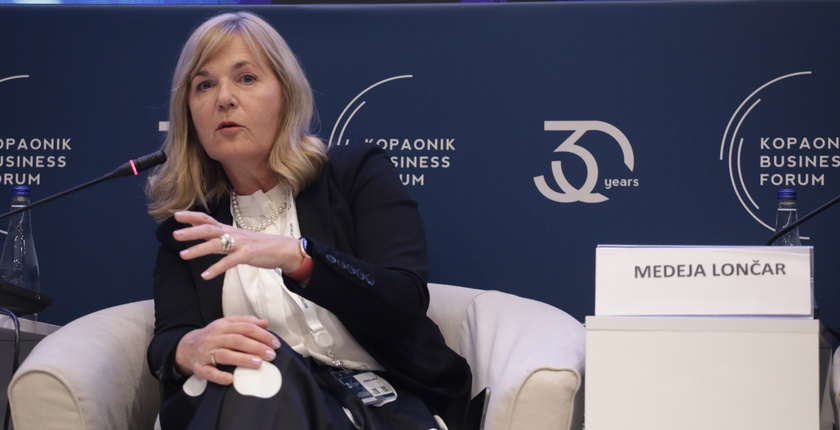
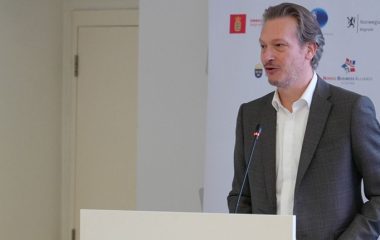
The introduction of circular economy can bring Serbia 30,000 new jobs and increase its economy’s competitiveness, Chief Executive Officer of Siemens Serbia Medeja Lončar said. Siemens is competitive exactly because it is dedicated to innovation and runs its business sustainably, she underscored.
Siemens formed an environmental protection department half a century ago and 25 years ago it already issued a document that was the precursor of today’s business sustainability reports.
“The green economy is not a trend, it is a necessity. Technology, digitalization and innovation are the answer for creating a sustainable future. The companies that don’t apprehend that will disappear from the business map in a decade or two,” CEO of Siemens Serbia Medeja Lončar pointed out at this year’s Kopaonik Business Forum and noted that European regulations and the financial market are making big leaps in supporting green projects.
We should think sustainably even in hard times
The company is competitive exactly because it is dedicated to innovation and runs its business sustainably, she stressed at a panel on financing circular economy. “We have to understand that sustainable development is not an expenditure but an investment in the future. Even in hard times we must think sustainably and invest responsibly as well as invest in further modernization. For instance, the creation of 150 million tons of CO2 emissions was avoided with the implementation of Siemens’s technologies and solutions at our clients and partners,” Lončar asserted.
Siemens’s clients and partners avoided 150 million tons of CO2 emissions into the atmosphere by applying its solutions
For Siemens, the only safe path for the planet is in the digitalization of industry and energy, the use of renewable energy sources, achieving resource efficiency and the introduction of circular economy. “My message to all businesspeople would be identical to the one that the founder of Siemens said 175 years ago when he pointed out that he wouldn’t sell the firm’s future for short-term profit. It remained the guideline and the course for the development of our company, in which there are no short-term considerations, and it is very up to date now when we talk about sustainable development,” Medeja Lončar said.
Investments in energy efficiency pay off in five years
She highlighted the fact that Siemens was among the first when it made an obligation eight years ago that it would become carbon neutral by 2030. Carbon dioxide emissions from its own structures and factories have been cut by 46%, she added. There was EUR 65 million invested in energy efficiency projects, which resulted in savings of EUR 13 million per year, while 78% of energy for the company’s business space comes from renewable sources, Lončar added.
Public oversight has been bolstered with activist movements, consumers that seek healthy products and with employees that want to work in companies that do business responsibly
Sustainability has become an important criterium in all spheres, the CEO said. “We have several influences at hand: regulations like the EU taxonomy, which directly points the capital market toward sustainable projects, companies that are asking their suppliers, upon demand from buyers, to heed the responsible behavior standards, as well as investors that demand for projects to have a clear green component. There is also the public oversight strengthened with activist movements, consumers that seek healthy products and with employees that want to work in companies that do business responsibly,” she stated.
Tax relief, additional financial support required from government
Lončar said Serbia has a lot of potential in the circular economy segment, but also a lot of work. This is a marathon for Serbia and it needs to be prepared well physically, she argued.
“The circular economy is an opportunity for the future development of a sustainable society in Serbia. It is estimated that the introduction of circular economy in Serbia can result in the creation of 30,000 jobs and additionally increase its economy’s competitiveness. In order for that to happen, we have to work much more on strengthening businesspeople’s knowledge of regulations, economic profitability and the necessity of its introduction due to EU regulations. In this part, the government and chambers of commerce, just like the German-Serbian Chamber of Industry and Commerce, can help significantly. Another thing to think about are tax relief for companies and additional financial support from the government for green projects,” Lončar said.
Be the first one to comment on this article.