






Photo: European Commission


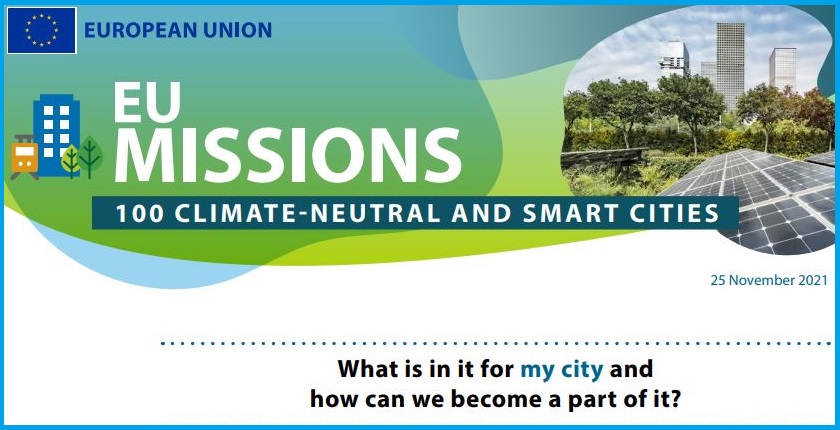
The European Commission has invited cities to join the European Mission on Climate-Neutral and Smart Cities in a push to achieve 100 climate-neutral and smart European cities by 2030.
The objective of the European Mission on Climate-Neutral and Smart Cities is also to ensure that these cities act as experimentation and innovation hubs to enable all European cities to follow suit by 2050.
The mission offers tailor-made advice and assistance from the Mission Platform, additional funding and financing opportunities through a Mission label, research & innovation, support through a national coordination network, networking opportunities, learning and exchange of experiences among cities, support with involving citizens in decision-making, and high visibility.
Part of the mission could become cities with at least 10 000 inhabitants
Part of the mission could become cities with at least 50 000 inhabitants, but for countries with five or fewer cities above 100,000, a lower threshold of 10,000 inhabitants will apply.
The Commission said that cities with high climate neutrality ambition promote diversity and inclusiveness of citizens and other stakeholders are preferred, the Commission said.
Applicants outside the EU eligible to apply are cities in countries associated with Horizon Europe or other third countries negotiating association to Horizon Europe. However, they may not be eligible to receive funding from other EU programmes, which would substantially limit the support they would receive, particularly from the Mission Platform.
The Commission said that support for these cities could include online assistance, citizens’ engagement, exchange of knowledge, and good practices through twinning and mentoring activities.
Cities could apply by January 31, 2022.
The European Commission has made an Info kit for cities available with comprehensive information about the mission. Additional information could be found in a frequently asked questions document, and cities can already pre-register.
Five key sectors
The mission will support different sectors working together on smart, digital, and other solutions to help achieve climate neutrality.
Key sectors include stationary energy (buildings, equipment, facilities), energy production and distribution, transport, waste management, industrial processes, product use, agriculture, forestry, and other land use.
In the first phase of the implementation of the Cities Mission, the Mission Platform is being established and run by the NetZeroCities consortium.



GREAT NEWS FOR A CLEANER EUROPE!!!