





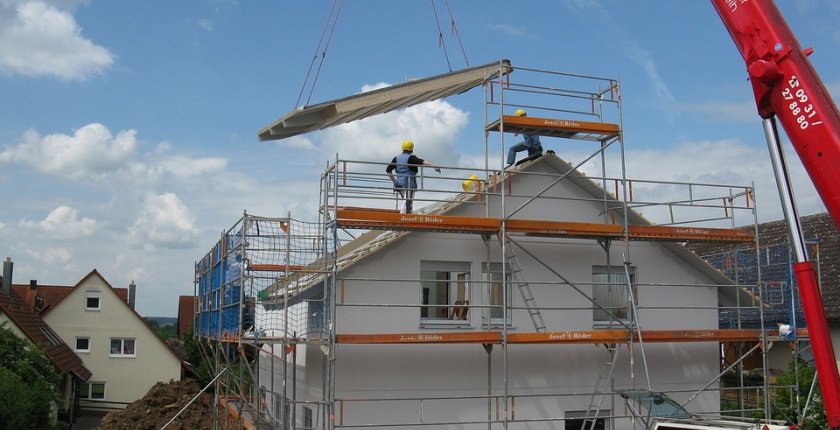
Photo: 2211438 from Pixabay


Sparkasse Bank Makedonija AD Skopje has secured a new EUR 5 million financing package for energy efficiency measures in households from the European Bank for Reconstruction and Development (EBRD).
The EBRD loan is provided under the Western Balkans Green Economy Financing Facility (WB GEFF II). Sparkasse Bank Makedonija, which was recently part of the financing agreement for first private wind farm in North Macedonia, has signed a similar arrangement with EBRD in February 2020.
Households in North Macedonia have an opportunity to invest in high-performance green technologies, materials and solutions in privately owned residential dwellings and buildings, EBRD said.
EBRD is also providing a EUR 20 million unfunded risk-sharing facility to Sparkasse Bank
Upon the completion of the projects, borrowers will be eligible for up to 20% cashback, funded by the European Union.
In addition, the EBRD is providing a EUR 20 million unfunded risk-sharing facility to Sparkasse Bank, through which it will guarantee up to 50% of the lender’s existing and new corporate exposure, thereby reducing the risk weighting and capital requirements on the loans. By freeing up funds, the facility will increase Sparkasse’s capacity to finance additional green economy projects, EBRD said.
This is the EBRD’s first risk-sharing facility in North Macedonia
The Risk Sharing Framework (RSF) is one of the three core financing frameworks of the bank’s Small Business Initiative. It is designed to allow the EBRD to share partner banks’ exposure to local enterprises through either funded or unfunded risk participation.
Andi Aranitasi, Head of the EBRD office in Skopje, said that with the signing of this first risk-sharing facility in North Macedonia, the bank expects to provide a further boost to the country’s businesses by providing them with better access to finance, helping them recover from the coronavirus pandemic and improve their competitiveness.
Energy efficiency loans combine benefits for households, suppliers, environment
Green loans for the promotion of energy efficiency combine benefits for households, suppliers of energy-efficient technologies and environmental protection, which is the focus of the bank’s corporate social responsibility strategy, Gligor Bishev, General Manager of Sparkasse Bank Makedonija.
The GEFF programme covers Albania, Bosnia and Herzegovina, Kosovo*, Montenegro, North Macedonia and Serbia. It was recently increased to EUR 135 million in response to growing demand.
The GEFF programme is implemented under the Regional Energy Efficiency Programme for the Western Balkans, co-financed by grant resources from the EU, the Western Balkan Investment Framework and the Austrian Federal Ministry of Finance.


Be the first one to comment on this article.