







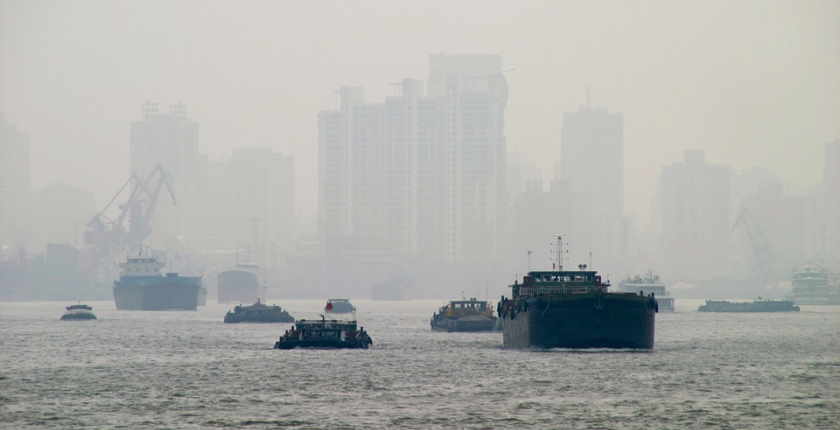
Photo: Peggy und Marco Lachmann-Anke from Pixabay


Carbon emissions trading in the world’s most populous country is based on CO2 emission limits assigned to a total of 2,225 power companies.
China, the world’s largest greenhouse gas emitter, has officially launched a carbon trading system to lower emissions and to meet its goal to become carbon neutral by 2060.
In September, Chinese President Xi Jinping announced the target during his speech at the general debate of the 75th session of the United Nations General Assembly.
Two thirds of the electricity consumption is secured from coal power plants
A set of interim rules for carbon emissions trading management in China came into effect on February 1, marking a key step in the establishment of a unified national emissions trading system (ETS) amid the country’s all-out efforts to meet its 2060 goal to become carbon neutral, agency Xinhua reported.
Power plants get carbon dioxide emission caps
The report adds a total of 2,225 power utilities were assigned with carbon dioxide emission limits. They can trade their emission quotas and firms that exceed their caps can purchase unused quotas from those with low emissions.
At the end of 2019, China’s installed capacity of coal power plants amounted to 1.04 TW, covering two-thirds of electricity consumption. Last year they accounted for about 40% of emissions and are also one of the main causes of air pollution in the country.
China now has the largest carbon scheme, the title held until now by the European Union, which in 2005 introduced its Emission Trading System (EU ETS). A ton of CO2 in the EU ETS closed yesterday at an all-time high EUR 37.38 at ICE Futures. Prices of the contracts have been setting records since the first half of December.
The intention is to include more industries in the national scheme
“It is the first time China has specified the responsibilities of enterprises to cut greenhouse gas emissions, which will help boost green development and tackle climate change,” according to Li Gao, head of the department for addressing climate change under the Ministry of Ecology and Environment.
Li said stable carbon trading among power firms will pave the way for the gradual expansion of the national ETS to include more industries.
According to Climate Change News, power plants in China will be retrospectively handed pollution allowances for the market’s first compliance cycle, which started on January 1 and covers CO2 emitted in 2019 and 2020.


Be the first one to comment on this article.