

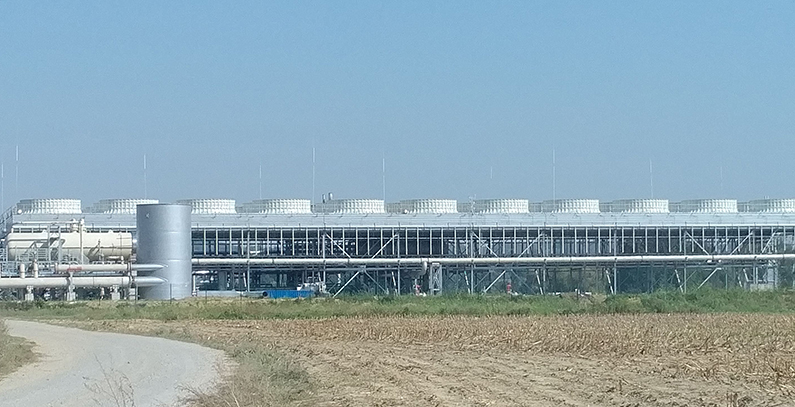
Zagreb-based MB Geothermal, wholly-owned by Turkish MB Holding, has signed a contract with Croatian engineering firm Ekonerg to design a binary (ORC) geothermal power plant called Legrad, with an installed capacity of 19.9 MW, in what will be MB Holding’s second major geothermal project in Croatia, according to a press release from MB Geothermal.
The geothermal ORC power plant in Legrad near Koprivnica will be built using advanced technologies, and it will have an annual electricity output of about 165 GWh, an equivalent of about 100,000 barrels of crude oil, according to the press release.
MB Geothermal has recently asked the Croatian transmission system operator to produce a study of the optimal technical solution for the proposed power plant’s connection to the grid. Since geothermal energy does not depend on weather conditions, the future plant will continuously deliver electricity to the northern Croatian power grid, according to the press release.
MB Holding already has geothermal ORC power plant in Velika Ciglena
The Legrad power plant is MB Holding’s second major geothermal project in Croatia as the Turkish company already operates a geothermal plant in Velika Ciglena near the city of Bjelovar. The Velika Ciglena plant is the first such facility in Croatia and the largest Organic Rankine Cycle (ORC) system in Europe.
The plant, which was put in operation at the end of 2018, has a total installed capacity of 16.5 MW and a power purchase agreement for 10 MW, which is equal to the average consumption of 29,000 Croatian households or a monthly electricity output of 7.3 GWh.
It exploits steam and hot water at 170°C to produce electricity to feed into the local power grid.
ORC systems can generate power exploiting multiple sources, such as renewables (biomass, geothermal energy, solar energy), traditional fuels and waste heat from industrial processes, waste incinerators, engines or gas turbines.
MB Holding’s medium term plan is to develop a total of 80 MW of geothermal capacities in Croatia, according to the press release.