


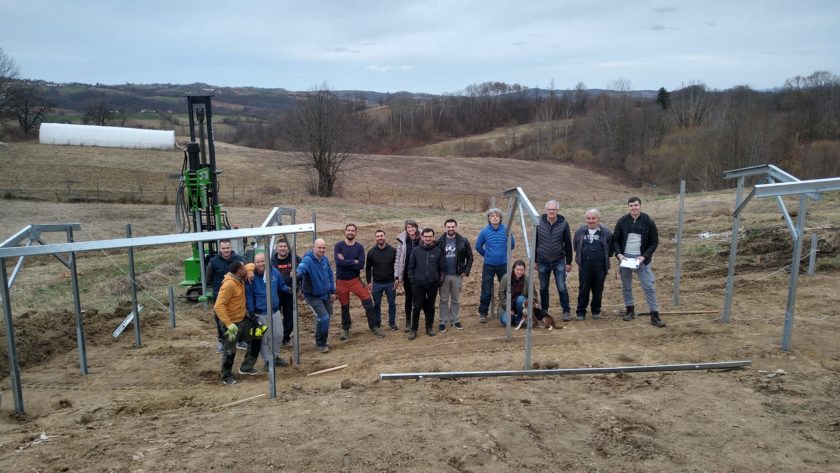
Agrisolar, an increasingly popular and effective solution for harnessing solar energy, has finally arrived in Serbia. Organic farm Organela in the village of Gornja Bukovica has become home to the country’s first agrisolar power plant.
Surrounded by pristine nature near the western city of Valjevo, Organela produces and processes organic fruit and vegetables, and from next week it will also generate green electricity on the same land where it grows its organic produce.
Following in the footsteps of the first cooperative-run solar power plants under the Solarna Stara project, built through crowdfunding in the villages of Dojkinci and Temska on Mount Stara Planina, the Solar Harvest project is the next venture of the Elektropionir energy cooperative and the first agrisolar power plant in Serbia.
The solar power plant with 48 photovoltaic panels, with a combined capacity of 17.5 kilowatts, is being installed in partnership with Conseko Solarni Sistemi. The works will be finished this week. Procedures to obtain permits and connect the plant to the grid have been initiated and will take several months, according to Elektropionir.
Agrisolar: symbiosis between humans and nature
Placing solar panels above agricultural land brings a double benefit. Solar power plants are most often criticized for taking up agricultural land, but this simultaneous production of energy and plants solves the problem.
“The Solar Harvest power plant represents a kind of symbiosis between humans and nature: under the solar panels that will generate electricity, there are plants which need shade in order to grow unhindered. The solar panels will provide them with the shade they need, while at the same time protecting them from hail,” says the farm’s owner, Pavle Đorđević.
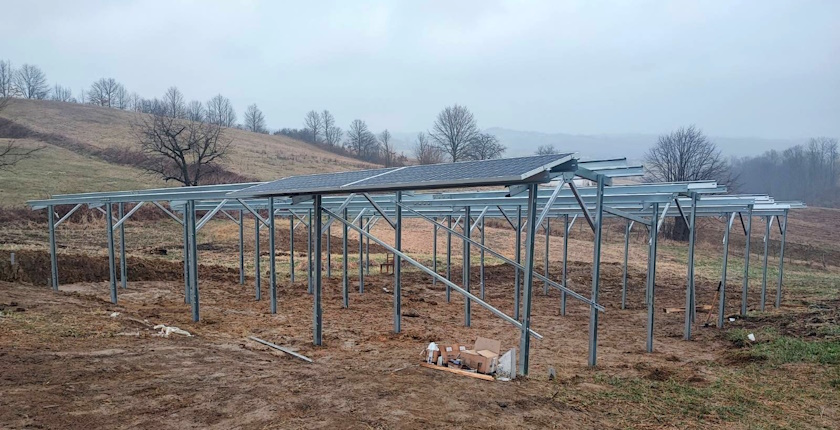
Photo: Solar Harvest, energy cooperative Elektropionir
Moreover, evaporation from plants will cool the solar panels, increasing their efficiency and ensuring the maximum utilization of their capacity.
At higher temperatures, above 30 degrees Celsius, the efficiency of solar panels actually decreases, so they benefit when they get cooled with evaporation from plants that grow underneath, according to Saša Petrović of Elektropionir.
Currants, rocket and clean energy from the same land plot
Under the solar panels, Organela will grow currants and rocket. Pavle Đorđević also said that students, who normally come to the estate for professional practice, will now get acquainted with innovative solutions for farming and producing electricity from renewable sources.
The project is implemented as part of the Innovative and Just Green Transition initiative, aimed at ensuring energy security and reducing energy poverty, which is implemented by UNDP Serbia in partnership with the Ministry of Environmental Protection and the Ministry of Mining and Energy, with financial support from the Government of Japan.
Depending on the capacity allowed by the grid operator, Solar Harvest may be expanded
Depending on the capacity that will be allowed by the grid operator, Solar Harvest may be further expanded in the next phase, potentially to areas that are not suitable for agriculture, such as slopes.
“We aim to develop solar models that will allow ordinary citizens to get involved in ecological and social renewal. Our cooperative is working to establish a network of distributed solar power plants collectively owned by ordinary people throughout Serbia,” said Elektropionir.