

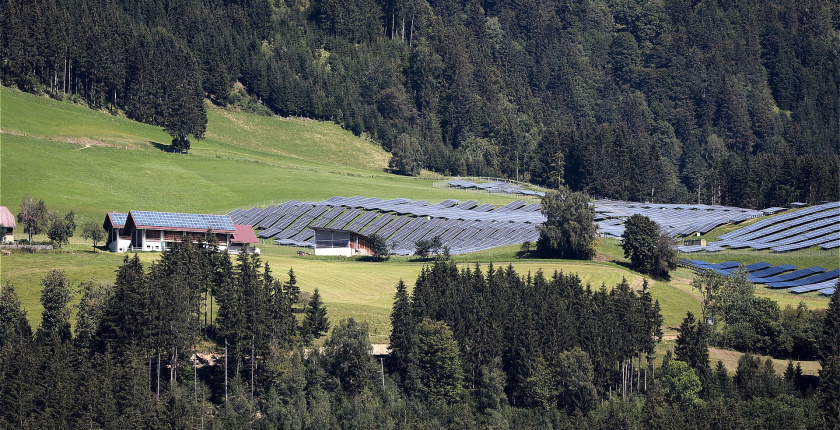
Slovenia’s power utilities ELES and SODO have completed the assessments of the grid potential and the locations for connecting solar power plants of over 10 MW to the transmission grid, and units with a capacity above 5 MW to the distribution network. It is technically possible to add 1,826 MW in total.
The review of the capacity of Slovenia’s grid to include utility-scale solar power plants is primarily intended for investors, and it represents a tool to achieve the government’s goal to add 1 GW of solar by 2025. It is also a part of the cabinet’s wider push to increase the use of renewables.
The 1 GW solar target was set by Prime Minister Robert Golob in July as one of the priorities. Now the Ministry of Infrastructure, which is responsible for the energy sector, has published an assessment that it produced with transmission system operator (TSO) ELES, and distribution system operator (DSO) SODO.
There are currently at least 58 locations where it is possible to set up solar power plants with a capacity higher than 10 MW
The government instructed Minister Bojan Kumer on September 14 to prepare a plan to increase the capacity for electricity production from solar energy by 1,000 MW by 2025 in suitable locations, in cooperation with ELES and SODO, the ministry said.
The review shows there are currently at least 58 locations on the territory of Slovenia where it is possible to set up utility-scale solar power plants with a capacity higher than 10 MW, and connect them to the transmission grid.
The potential is similar in all five power distribution companies
ELES estimated the total technical potential for connecting solar power plants at 1.031 MW, the statement adds
The greatest potential was recorded in the regions of Drava, Sava, Central Slovenia and Mura.
The estimated potential for the integration of photovoltaic facilities into the low-voltage network is 795 MW. All five power distribution companies would have an almost equal share, according to SODO.
The ministry has prepared several draft laws to speed up investments in renewables, and published them for public review. It has also launched a proposal for the long-term plan for achieving the goals of promoting the production and use of renewables over the next five years.
Comments (1)
Taimoor Zafar
My name is TAIMOOR ZAFAR. I live in Pakistan, I work as a soler man. I want a job in your country I have four years of experience.