






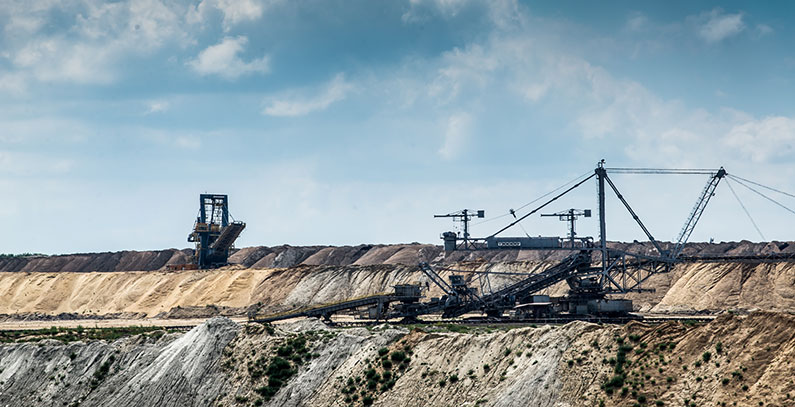
Photo: Open-pit coal mine in Kostolac (EPS)


Serbia’s state-owned power utility Elektroprivreda Srbije (EPS) plans to install 97.2 MW solar power plant Srednje Kostolačko Ostrvo. The investment is estimated at EUR 84 million.
After launching the construction of the 66 MW Kostolac wind farm, this should be the company’s second major renewable energy project.
The PV plant is planned at an ash and slag dump in the Kostolac mining basin
The photovoltaic (PV) power plant should be installed at an ash and slag dump in the Kostolac mining basin, according to the answers sent by EPS to Balkan Green Energy News.
Kostolac mining basin includes open-pit coal mines and coal power plant.
The practice of installing solar power plants on the ash and slag dumps is increasingly being implemented worldwide amid phasing out coal in energy production.
EPS has earlier launched the 9.95 MW Petka solar power plant project at the Ćirikovac mine landfill, also in the Kostolac mining basin. The expected power production is 12.9 GWh per year.
EPS said that at the end of August 2019 it received the permit for its construction.
The planned capacity is 97.2 MW and the expected annual production 115 GWh
EPS anticipates the project parameters could be better because solar power cost is rapidly decreasing. Efficiency has risen by about 10% and prices dipped 20%-25%, so the cost is about EUR 8 million, down from EUR 11 million estimated in 2016.
The Srednje Kostlačko Ostrvo PV plant is the second project under development, worth EUR 84 million, with an installed capacity of 97.2 MW and an average annual production of 115 GWh, EPS said.
The project should be implemented in three years
The location for the plant is an active landfill of ash and slag from coal power plants.
Its closure and remediation must be finished before the construction, EPS said. It added the project is scheduled to be implemented in three years, with investments of about EUR 15 million.
The location spans 270 hectares and could be separated into three investment zones, allowing construction in phases.
North Macedonia’s power company ESM also decided to build solar power plants at closed mining sites and landfills of ash and slag. It has already selected one partner and is looking for another for the projects at the Oslomej lignite mine.
Brana Lazići solar power plant installed in 2016
EPS already has one smaller solar power plant. 330 kW Brana Lazići is in Zaovine, within the Bajina Bašta hydropower plant.
In 2016, the first 110 kW was installed and the remaining 220 kW in 2017.
The PV system has more than 1,000 panels. In 2018 it produced 375.9 MWh, and in the first nine months in 2019 the output reached 320.8 MWh.


Be the first one to comment on this article.