

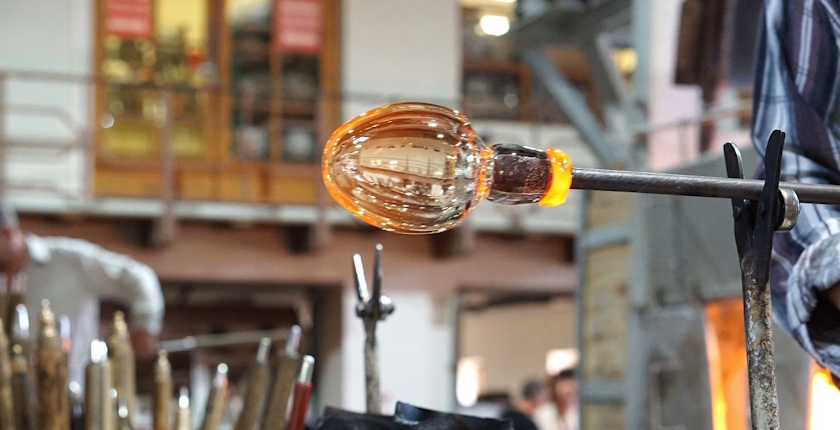
A group of researchers from Serbia, Slovenia, and Denmark is creating a completely new, scientifically based tool for assessing environmental impact – a carbon footprint calculator for glass products. The calculator can contribute to reducing the total greenhouse gas emissions in the sector to zero.
The project Glassmaking Tradition Meets Innovation is implemented by Slovenian organization Kreativno središče Center Rog, three entities in Serbia – Foundation Institute for Creative Entrepreneurship and Innovation, the Creative Glass Serbia initiative, and the Foundation for the Advancement of Economics (FREN) – and the Museum Sydøstdanmark from Denmark.
The calculator is based on an original and innovative methodology that will conduct an interdisciplinary analysis of different types of glass materials, especially glass waste, and the ways they can be creatively processed, according to Creative Glass Serbia.
Molnar: Glass practically never has to become waste
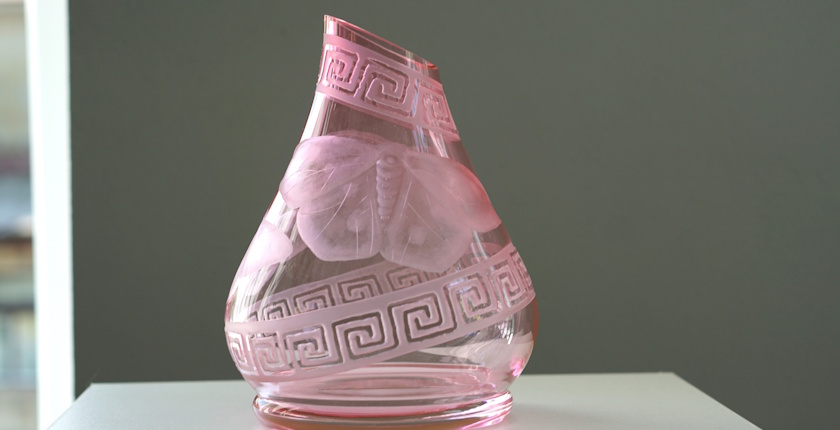
The tool will enable artists and creative entrepreneurs across Europe who work with glass to calculate the carbon footprint of various handcrafted glass items. With the help of the calculator, they will be able to reevaluate their materials, techniques, tools, designs, and ideas to develop more sustainable practices and create new values that are in line with modern ecological standards in an era when humanity is struggling with the consequences of climate change.
Dejan Molnar from the Faculty of Economics at the University of Belgrade, a member of the project team, noted that glass is one of the most recyclable materials. Unlike, for example, plastic and metals, during recycling it doesn’t lose quality and it has a lower carbon footprint.
If used and recycled properly, glass practically never has to be considered waste, he pointed out.
In his words, the European Union recycles nearly 80% of glass packaging, with even more ambitious goals aiming to increase the recycled glass packaging rate to 90% by 2030.
In Serbia, 45% to 50% of glass packaging is recycled
“Unfortunately, the situation in this area is not as ‘bright’ in the Western Balkans region, nor in Serbia. In our country, recycling ranges between 45% and 50%,” said Molnar, who is also a member of FREN.
He recalled that currently there is no tool that assesses environmental standards during the production of glass products, and that buyers of artistic glass pieces are paying more attention to how green the products are.
Therefore, one of the most important results of the carbon footprint calculator will be very useful in a broader sense – to raise public awareness about environmentally sustainable and circular business models and ideas in glassmaking practices, he explained.
The calculator will be introduced in Serbia and Europe by the end of November. The project is co-financed by the European Union. It lasts from 2024 to 2027.