


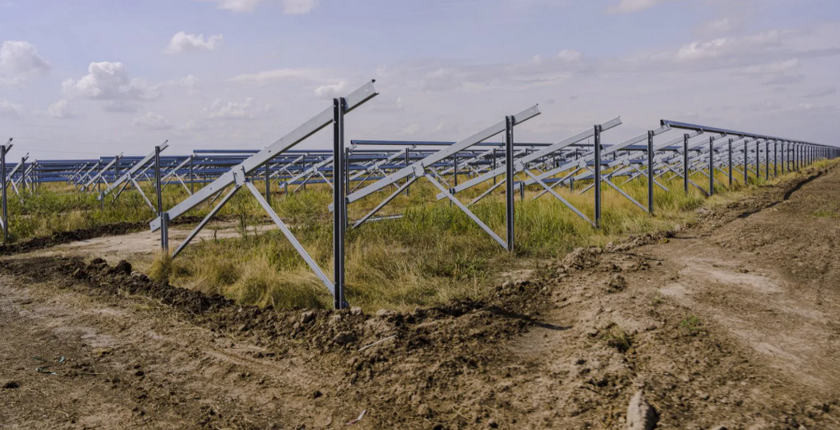
Israel’s Nofar Energy has begun construction of the 282 MW Corbii Mari solar park in Romania, with plans to connect it to the grid next year. The project is being financed from a recently secured EUR 192 million financing package that also covers the company’s two other large solar facilities in Romania.
The financing for Nofar’s projects was arranged by the European Bank for Reconstruction and Development (EBRD). The bank is providing a EUR 64 million loan, with the remaining EUR 128 million mobilized from commercial lenders.
In addition to Corbii Mari, the financial package covers the Iepurești II and Slobozia solar parks. The total capacity of all three projects is 531 MW, and the planned annual electricity production is 676 GWh.
Two solar parks are zero-subsidy projects, while the third has secured a contract for difference
Corbii Mari and Iepurești II will sell electricity on Romania’s competitive day-ahead market, without receiving any subsidies, while Slobozia will benefit from a 15-year contract for difference (CfD), according to an EBRD press release.
In late 2023, when Nofar acquired the Corbii Mari project, it was announced that the solar power plant would produce 362 GWh of electricity a year, enough to meet the needs of around 160,000 households.
There are several solar projects in Romania larger than Corbii Mari in various stage of development. These include the 1 GW Dama Solar, developed by Czech company Rezolv Energy, and the 300 MW Butimanu project, implemented by the investment division of Sweden-based Ingka Holding, the largest IKEA franchisee company.
Austria-based Enery is preparing to begin construction works early next year on a photovoltaic facility of 750 MW in peak capacity just outside of Bucharest.
Corbii Mari is set to be Romania’s biggest solar park to date
Given the longer completion timelines for these projects, Corbii Mari is expected to be Romania’s largest solar park for a time, local media reported.
The top spot is currently held by Econergy’s Rătești solar power plant, with an installed capacity of 155 MW. Notably, the company has selected Shanghai Electric in October for its Părău 2 project of 342 MW in peak capacity, together with a 150 MW battery energy storage system (BESS).
Nofar is also building its Ghimpați solar project near Bucharest, with an installed capacity of 146 MW. Earlier this year, the Israeli company said it had connected to the grid its solar park in Ada, the largest such system in neighboring Serbia.