





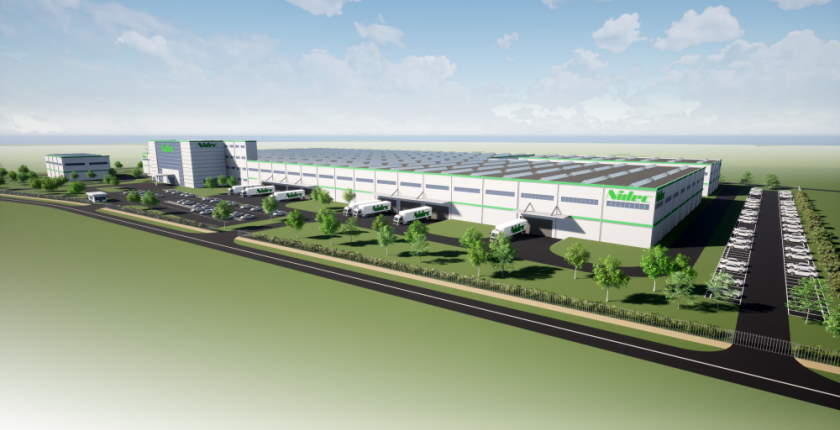
The future Nidec Electric Motor Serbia factory (Nidec)


Nidec’s business bases in Serbia will represent the core hub of the company’s European business. The Kyoto-based motor manufacturer intends to invest USD 1.9 billion in an electric vehicle motor factory in Serbia.
The new business bases will be used to supply products to the European market, while looking to design and develop products locally in Serbia, a country abundant in people in the fields of science and engineering who are fluent in English, the company said.
The company has established an economic development zone in the city of Pinghu, China, where 12 companies develop, produce, and sell their products, enhancing the company’s presence in the Chinese market. Now, in Europe, as part of its growth strategy based on synergies within the Nidec Group, the company is poised to utilize its new business bases in Serbia as the core hub of Nidec’s European business.
Nidec will construct two facilities: Nidec Electric Motor Serbia, and Nidec Elesys Europe
The company said it has opened a new business office in Novi Sad to start preparations to start up the factories on a full scale. It also completed the execution of a strategic alliance agreement with the University of Novi Sad, to actively engage in a range of activities including technological exchanges via industry-academia partnerships.
Nidec will build two facilities: Nidec Electric Motor Serbia, and Nidec Elesys Europe. The start of construction is planned for September, and completion for mid-2022.
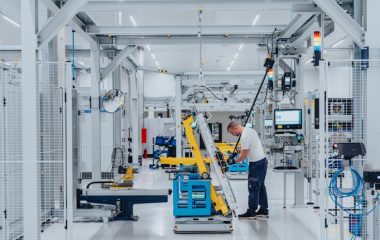
The first one will manufacture and sell automotive motors and related products, and employ 1,000 people, while the second will manufacture and sell automotive inverters and electronic control units (ECUs), and hire 200 workers.
The investment is part of the Western Balkans Cooperation Initiative
The launch of Nidec’s business in Serbia matches the Western Balkans Cooperation Initiative, which the Japanese government is currently promoting in Serbia and other countries. It receives support from both governments.
Demand for automotive motors, and for high-efficiency brushless DC motors for home appliances is expanding in the EU
In Europe, where environmental regulations and major countries’ automobile CO2 emission regulations are becoming increasingly stricter, demand is expanding for automotive motors and related products, and for high-efficiency brushless direct current (DC) motors for home appliance businesses, the company said.
The plan for the investment was revealed at the meeting with president Aleksandar Vučić, Novi Sad Mayor Miloš Vučević, and Japanese Ambassador to Serbia Takahiko Katsumata.

Be the first one to comment on this article.