


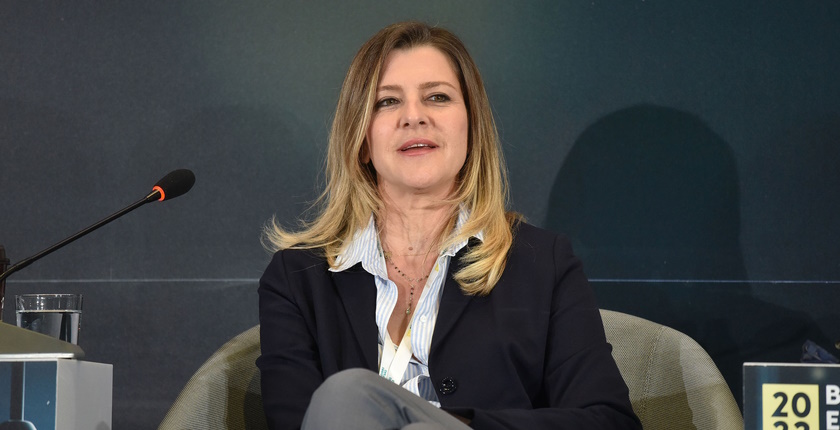
The new battery installation requirement for developers seeking grid connection permits will increase the cost of projects and automatically clear a large number of requests for grid connection, Maja Turković, Executive Vice President, CWP Europe, said at the Belgrade Energy Forum 2023 (BEF 2023), organised by Balkan Green Energy News.
Changes to the law on renewables, which introduced the battery installation requirement, was one of the main topics of the panel Major challenges for an increased share of renewable energy sources in the SEE region.
Maja Turković said that piled-up applications for grid connection in Serbia and across the region had brought projects to a standstill. The state has failed to protect its vital resource, the grid, in time, she added.
There are only 500 MW of batteries integrated into renewable energy plants across Europe
Many unknowns exist regarding the requirement to install batteries, and investors are still waiting to see the by-laws. However, if the idea were to unlock investments, this requirement would not help, according to Turković.
She said that battery installation would increase the cost of projects by 20-30%.
Participants in the panel noted that in the United States, 45% of all solar projects under development include a battery, compared to just 10% of wind projects, adding that this is because batteries are more compatible with solar.
Also, only 500 MW of batteries are integrated into renewable energy plants across Europe, with 40 GW of such power plants installed last year alone. Of the total of 500 MW of batteries, 270 MW is in Britain, which has a developed market for system services.
Turković: investors in wind or solar will have to finance batteries from their own capital
Revenue streams for batteries, according to her, are capacity markets and arbitration, as well as for the ancillary services. However, these revenues cannot be monetized to get financing from banks.
This means that investors in wind or solar will have to finance batteries from their own capital, which will quickly remove the bottleneck created by grid connection applications in Serbia, Turković concluded.