


Renewables

Impact study for hydro plants at Sutjeska blocked

Published

March 8, 2015

Comments

comments icon

0

Share

Published:

March 8, 2015

Comments:

comments icon

0

Share

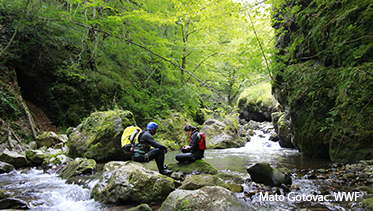
Republika Srpska’s Ministry of Spatial Planning, Construction and Ecology blocked the process of approving the environmental impact study for small hydropower plants on Hrčavka river in the Sutjeska National Park, because the protected area’s spatial plan must be approved first, Energetika.ba portal said, citing Fena agency.

Nataša Crnković from the Center for Environment in Banjaluka, who heads the Battle for Sutjeska (Bitka za Sutjesku) campaign against the construction of hydro plants, said the spatial plan had already been withdrawn twice from the procedure in the entity’s parliament, being clearly controversial exactly because of the planned power facilities. Soon after the district court in Banjaluka ruled in favor of the Center for Environment, the ministry decided to block the procedure.


Related Articles

floating solar power plant hse sostanj

Šoštanj authorities demand clear benefits for citizens from Slovenia’s first floating solar plant

30 January 2026 - State-owned power utility HSE hopes that construction on Slovenia's first floating solar power plant could begin in late 2027

Romania preparing to build giant AI hub data centers

Romania preparing to build giant AI hub, data centers

29 January 2026 - Romania is developing its Black Sea AI Gigafactory project, of up to EUR 5 billion, and several other investments in new technologies

montenegro TNC eco team mapping low-conflict solar wind potential

Montenegro identifies 16.3 GW of low-conflict solar and wind potential

29 January 2026 - The Montenegro Energy Growth and Acceleration project was implemented by The Nature Conservancy and Montenegrin NGO Eco-Team

Record battery installations EU 2025 Bulgaria enters top 3

Record battery installations in EU in 2025 as Bulgaria enters top 3

28 January 2026 - The European Union added 27.1 GWh of battery capacity last year, marking a 12th consecutive record – driven by utility-scale storage