







Photo: iStock


In the absence of faster structural change in the energy sector, rising demand for electricity over the next three years could result in additional market volatility and continued high emissions, according to a report produced by the International Energy Agency.
The International Energy Agency (IEA) last year recorded a 6 percent increase in global electricity demand.
It was the largest ever annual increase in absolute terms, over 1,500 TW, and the largest in percentage terms since 2010, according to the IEA’s semi-annual Electricity Market Report.
Demand for fossil fuels and supply constraints pushed energy prices
The rise was driven by the rapid economic rebound, and more extreme weather conditions than in 2020, including a colder-than-average winter. IEA sees the increased demand for fossil fuels combined with supply constraints as reasons for scarcities and high energy prices.
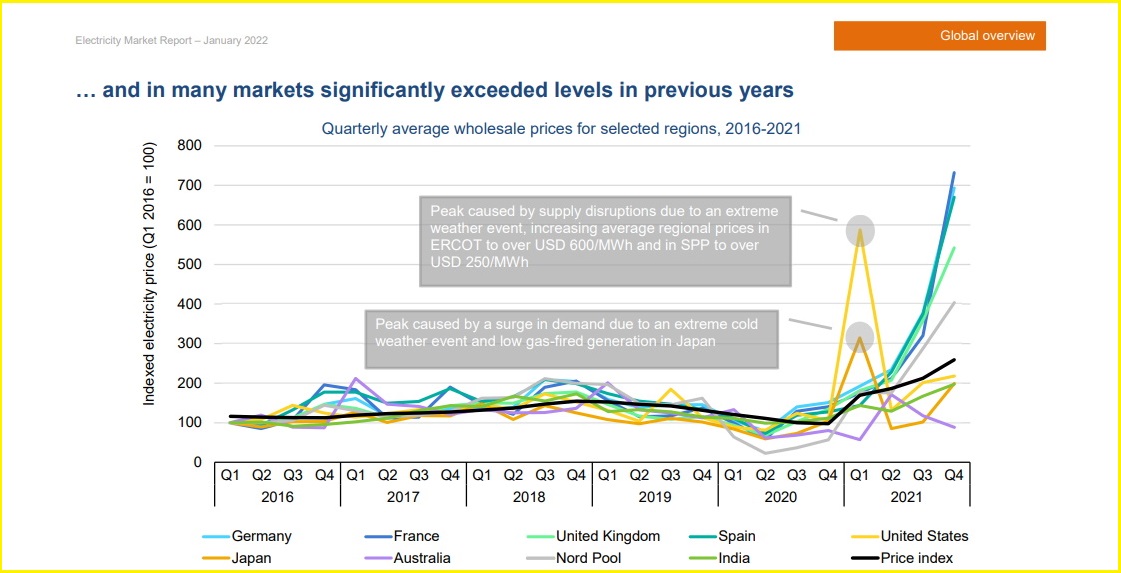
According to the report, due to particularly high prices for gas in Europe and its 20% share in the generation mix, average wholesale electricity prices in the fourth quarter of 2021 were more than four times as high as their 2015-2020 average.
Rising demand over the next three years could result in additional market volatility
“Electricity is central to modern life and clean electricity is pivotal to energy transitions, but in the absence of faster structural change in the sector, rising demand over the next three years could result in additional market volatility and continued high emissions,” the IEA said.
Fatih Birol, IEA’s director, said the spikes in electricity prices have been causing hardship for many households and businesses and risk fueling social tensions. He advised policy makers to take action now to soften the impacts on the most vulnerable and address the underlying causes.
Higher investment in low-carbon energy technologies including renewables, energy efficiency and nuclear power – alongside an expansion of robust and smart electricity grids – can help us get out of today’s difficulties, he added.
Coal power output increase outpaces renewables growth
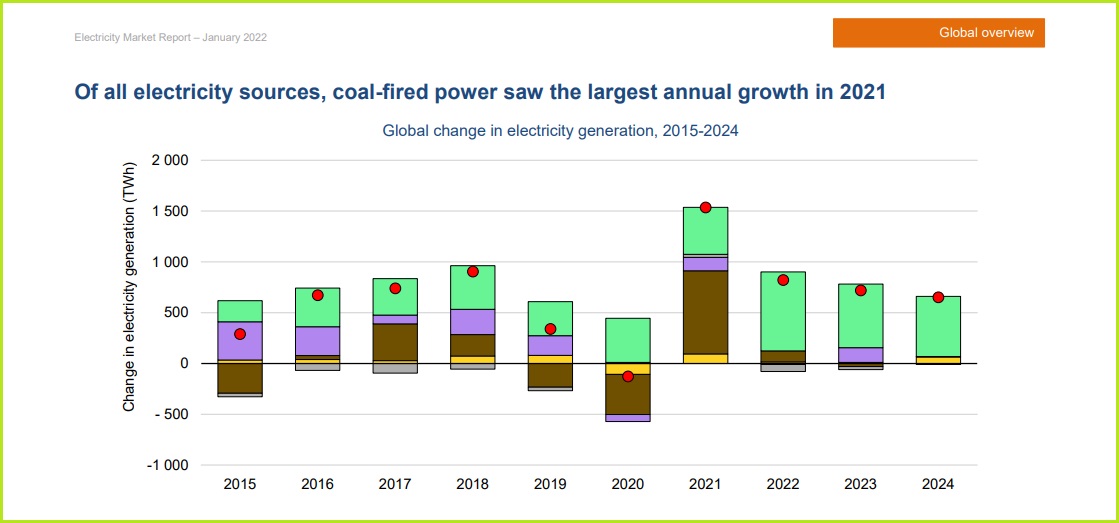
Around half of the global growth in electricity demand took place in China, where the annual increase was 10%. The industrial sector contributed the most to demand growth while coal secured more than half of the increase in global demand.
As IEA earlier predicted, coal-fired electricity generation reached an all-time peak, growing by 9%, the fastest since 2011. The increase was driven mostly by coal’s improved cost competitiveness compared to gas due to the high natural gas prices, which led to gas-to-coal switching.
On the other side, renewables grew by 6%, compared to 3.5% by nuclear, and 2% by gas-fired facilities. However, CO2 emissions from electricity rose by close to 7%, taking them to a record high, the report reads.
Emissions from electricity need to decline by 55% by 2030 to meet the Net Zero Emissions by 2050 Scenario
“Emissions from electricity need to decline by 55% by 2030 to meet our Net Zero Emissions by 2050 Scenario, but in the absence of major policy action from governments, those emissions are set to remain around the same level for the next three years,” said Birol.
He stressed massive changes are needed for the electricity sector to fulfill its critical role in decarbonizing the broader energy system.
For 2022-2024, the report anticipates electricity demand growing 2.7% a year on average, although the COVID-19 pandemic and high energy prices bring some uncertainty to this outlook.
Renewables are set to grow by 8% per year on average, serving more than 90% of net demand growth during this period, the IEA said.


Be the first one to comment on this article.