







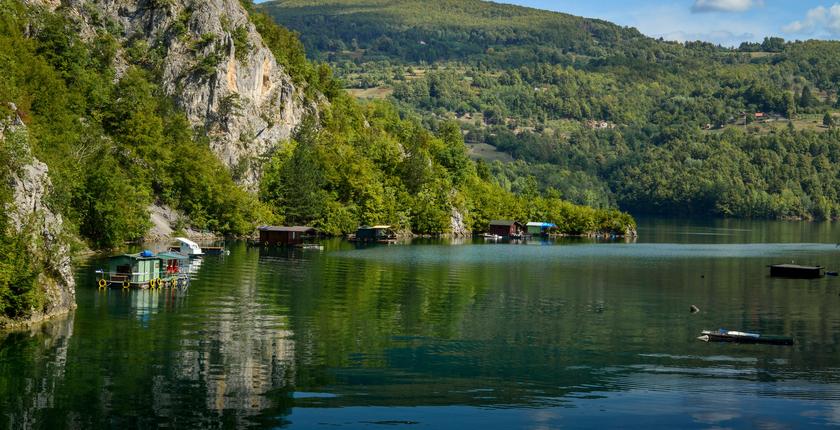
Photo: kokas4oka from Pixabay


Share


Share
The construction of Buk Bijela and two other hydropower plants, planned as a cascade in the upper course of the Drina, will turn that section of the river into a lake stretching nearly 30 kilometers. This will alter the ecosystem and the local climate, environmental activists warned following a public hearing on the draft environmental impact assessment (EIA) study for the Buk Bijela hydropower plant. Representatives of the investors, for their part, highlighted the project’s major significance for the economy and energy supply, adding that its potential impact on biodiversity can be mitigated.
Buk Bijela, together with the Foča and Paunci hydropower plants, will effectively create a lake in the most beautiful part of the Drina, with the local population bearing the brunt of the impact, according to activists from the Banja Luka-based Center for Environment.
The hydropower plants on the Drina could also affect the environment in Montenegro
The Gornja Drina (Upper Drina) hydropower complex is a joint venture between state-owned power utilities of Serbia and the Republic of Srpska, which is one of the two political entities of Bosnia and Herzegovina. However, the project faces numerous challenges, including its potential environmental impact on neighboring Montenegro.
The start of preparatory works for the construction of the 93 MW Buk Bijela hydropower plant was officially marked in 2021.
Possible impact on human health and biodiversity
At the public hearing on the Buk Bijela environmental impact study, concerns were also raised about a possible increase in air humidity in the area once the reservoir for the hydropower plants is built, with the argument that it could affect people’s health.
Moreover, the lake expected to form will fragment the riverine and riparian ecosystem, affecting all living species in the area, the Center for Environment warned.
The reservoir will affect all species living in and around the river
The hydropower plants will have a particularly adverse impact on the habitat of the huchen, a fish species classified as vulnerable globally and as endangered in the European Union, the organization noted.
Danilo Mrdak, professor at the Faculty of Science and Mathematics in Podgorica and member of the expert team that drafted the study, agreed that fish populations could be the most affected, particularly the huchen, but added that this impact can be mitigated.
Professor Mrdak: It is possible to mitigate the impact on fish
“There are mechanisms to prevent this by constructing facilities that will reduce it, not completely prevent it, but mitigate it,” Mrdak explained.
The Ministry of Energy and Mining of the Republic of Srpska emphasizes that everything was done in line with international standards and that the construction of Buk Bijela will provide the municipality of Foča with another development opportunity.



Be the first one to comment on this article.