







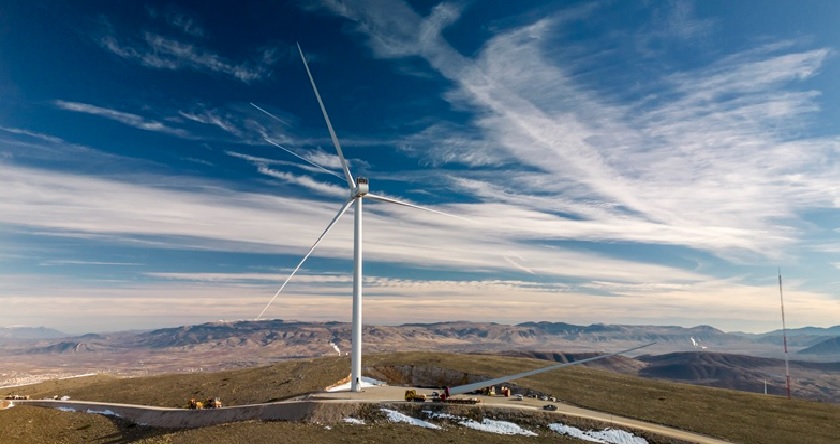
Photo: HWEA


The wind energy sector suffers in Greece as a result of multi-year delays in the licensing process, said Hellenic Wind Energy Association (HWEA or ELETAEN).
It is indicative that within an eight-year horizon, just 3.14% of planned wind projects are completed. The main obstacle is the various local and national regulatory bodies that are not supervised by the Ministry of Environment and Energy.
A very hostile environment for investments
HWEA claimed that “these bodies do not implement the law properly, fairly or timely” as they “violate schedules, refuse to justify systematically negative opinions, re-examine and reject already licensed projects and therefore contribute to a very hostile environment.”
New spatial plan must avoid exclusions
These comments came as the Greek government is expected soon to present the new spatial plan for renewable energy. HWEA warned against any horizontal exclusions from areas with a high wind potential around the country .
The association also highlighted its finding that the installation of a wind farm in an area with excellent potential enables the final energy cost to be 35% lower than at sites with average wind conditions.
Any horizontal exclusions are against the European Union’s Renewable Energy Directive 3 (RED3, Directive 2023/2413), HWEA added. These stipulations cannot be superseded by generic studies such as spatial plans or special environmental studies. On the contrary, each project must be evaluated based on a wide variety of factors, such as energy cost benefits, lcoal development, biodiversity and the environment.
Moreover, HWEA advised that the new plan must not apply to investments that have already secured environmental terms or have submitted a full application to acquire them.
Given the unfair and unequal way that the licensing law is being applied, investors asked for the spatial plan to provide a geographic space multiple times bigger than the one considered necessary for the 2050 national goal.



Be the first one to comment on this article.