


Electricity

Households in Serbia and Kosovo* paid the lowest energy prices in Western Balkans

Photo: Pixabay

Published

December 1, 2017

Country

Comments

comments icon

0

Share

Published:

December 1, 2017

Country:

Comments:

comments icon

0

Share

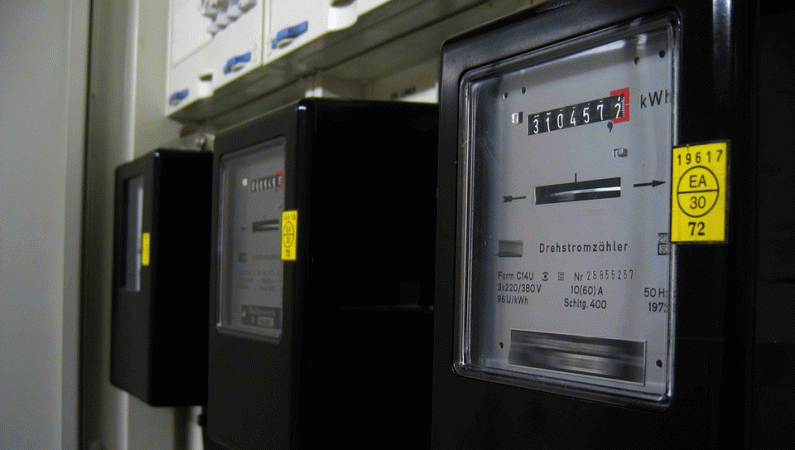
Households electricity prices in Serbia and Kosovo* are the lowest in the Western Balkans region, though both countries had the highest increase between the first half of the 2016 and first half of this year, the Eurostat data showed.

Expressed in euro, the average electricity price per 100 kWh in the 1st half of 2017 in the European Union was EUR 20.4 while in Serbia and Kosovo* price was EUR 6.6.

The highest electricity price in the region was in the Montenegro (9.7), followed by Former Yugoslav Republic of Macedonia (8.2), Albania (8.4) and Bosnia and Herzegovina (8.6).

When expressed in purchasing power standards (PPS), an artificial common reference currency that eliminates general price level differences between countries, the lowest household electricity prices were found again in Serbia (14.6), followed by Bosnia and Herzegovina (17.8), Former Yugoslav Republic of Macedonia (19.1), Albania (19.3) and Montenegro (19.7).

In the European Union (EU), prices in national currency slightly decreased (-0.5%) on average between the first half of 2016 and the first half of 2017 while in the majority of the Western Balkans countries increased. The highest increase was registered by far in Kosovo* (+12.2%), followed by Serbia (+4.1%), BiH (+3.3%) and Montenegro (+1.7%). Price in FYRM decreased (-0.4%) and didn’t change in Albania.

Taxes and levies in the EU made up on average over a third (37%) of the electricity price charged to households in the first half of 2017.

The share of taxes and levies in total household electricity prices varied between Western Balkans countries, ranging from 23% in Serbia to 12% in Montenegro.
* This designation is without prejudice to positions on status and is in line with UNSCR 1244/99 and the ICJ Opinion on the Kosovo declaration of independence.
Comments (0)

Be the first one to comment on this article.

Enter Your Comment
Please wait... Please fill in the required fields. There seems to be an error, please refresh the page and try again. Your comment has been sent.

Related Articles

Spajic Japanese Itochu Montenegro waste energy

Spajić: Japanese company Itochu eyes Montenegro’s waste-to-energy project

09 January 2026 - Prime Minister of Montenegro Milojko Spajić said a 50 MW incinerator is about to be built for municipal waste

ContourGlobal 500 MWh standalone BESS facility in Bulgaria

ContourGlobal installs 500 MWh standalone BESS facility in Bulgaria

09 January 2026 - ContourGlobal inaugurated a standalone battery energy storage system of 202 MW. It is participating in Bulgaria’s day-ahead and intraday electricity markets.

slovenia subsidies economy companies electricity

Slovenia to aid energy-intensive companies with EUR 30 million per year

09 January 2026 - Minister of the Environment, Climate and Energy Bojan Kumer said the bill addresses the serious challenges facing this segment of Slovenia's economy

Serbia developing legal framework CO2 storage

Serbia developing legal framework for CO2 storage

08 January 2026 - Serbia's draft law on hydrocarbon exploration and exploitation will include permanent disposal of CO2 in geological formations of depleted deposits