


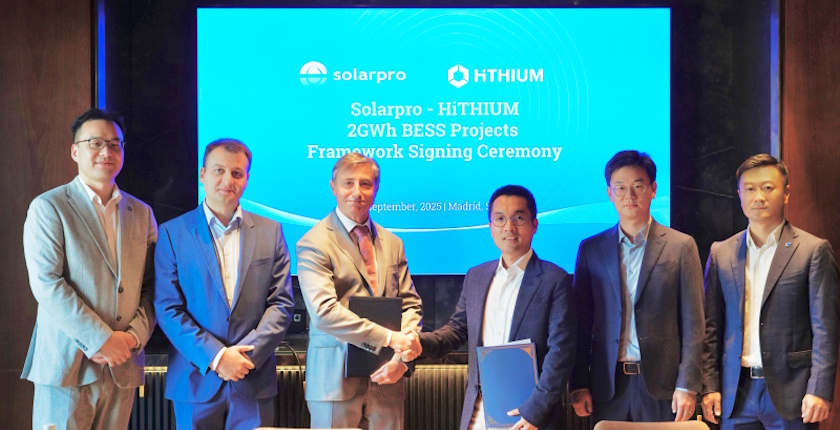
China-based HiTHIUM and Solarpro Holding have signed a 2 GWh master supply agreement for battery energy storage systems.
HiTHIUM is a global provider of long-duration energy storage (LDES) technology, while Solarpro Holding is an EPC provider of photovoltaic and battery energy storage systems (BESS) in Europe.
The agreement will support multiple utility-scale projects across Eastern Europe, including but not limited to Bulgaria, Hungary, Romania, and North Macedonia – which are accelerating renewable deployment as part of their energy transition strategies, according to HiTHIUM.
HiTHIUM will supply its bespoke DC block solutions
Under the agreement, HiTHIUM will supply its bespoke direct current (DC) block solutions, applying the ∞Power 6.25 MWh BESS with high-performance batteries of 1,175 Ah and 587 Ah.
The devices will be deployed exclusively in several utility-scale projects across Europe, HiTHIUM stressed.
DC block is the basic unit of a large BESS and a ready-to-deploy solution.
HiTHIUM expressed the opinion that intraday market volatility and cannibalization of photovoltaics can be addressed mostly by LDES solutions.
Li: We will deliver projects that turn renewables generation into dispatchable, flexible, and reliable resources
According to Kelson Li, HiTHIUM Europe Senior Director of Sales, Eastern Europe’s energy transformation requires energy storage solutions that go beyond short-term balancing.
“By combining HiTHIUM’s industry-leading long-duration energy storage technology with Solarpro’s deep regional experience in large-scale renewable energy integration, we will deliver projects that turn renewable generation into dispatchable, flexible, and reliable resources, advancing the region’s clean energy transition,” he underlined.
Nenov: LDES is a next critical technology upgrade of Europe’s electricity generation mix
Konstantin Nenov, Solarpro Chairman, said his company sees LDES as the next critical technology upgrade of Europe’s electricity generation mix.
“Partnering with HiTHIUM allows us to combine their advanced BESS technology with our proven track record in designing, integration and delivering complex renewable and storage projects across the region,” he stated.
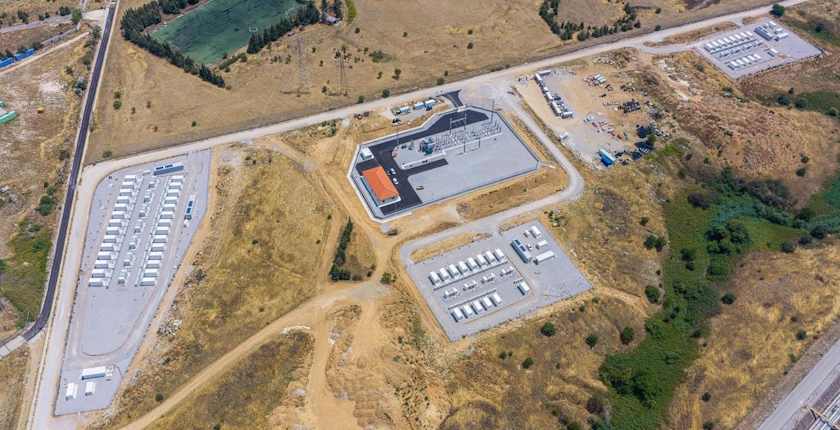
HiTHIUM and Solarpro have already collaborated on landmark projects in Bulgaria and Hungary that were commissioned in 2024 and 2025.